The Most Exhausting Trade I've Ever Made🇺🇸🇮🇷🇮🇱
Recapping how I thought the war with Iran would end.

Prologue:
The war between the US and Israel and Iran is finally over.
And with it the most emotionally, professionally, and financially challenging six months of my ‘trading career’.
In 2025, I had a rule not to get involved in Middle East markets after the infamous Israel strike on Iran that prompted the 12-day war. I broke that rule when Trump negotiated the Gaza ceasefire. Bad financial decision.
Then unrest in Iran kicked off in January and I became interested again, mostly because I find Iran a fascinating civilization. I took another loss trying to trade and predict the prologue to the war in January.
I took an even bigger loss opposing the war itself, even though I intuitively knew better. The ceasefire announcement surprised me as well. But in terms of trading, I dodged a bullet and managed to turn a profit.
And then the infamous 3-month Schrödinger’s ceasefire negotiation period started. I converged on the thesis below pretty quickly and wrote the analysis in time for the first failed attempt that left JD Vance waiting on the tarmac. It was a classic case of ‘not wrong, just early.’
We got another fakeout in late May, when peace seemed all but agreed and Mr. Art of the Deal changed his mind again. When the deal doubters and naysayers felt like it will never happen, Trump times it to perfection to gift himself “#10 settled wars” for his 80th birthday.
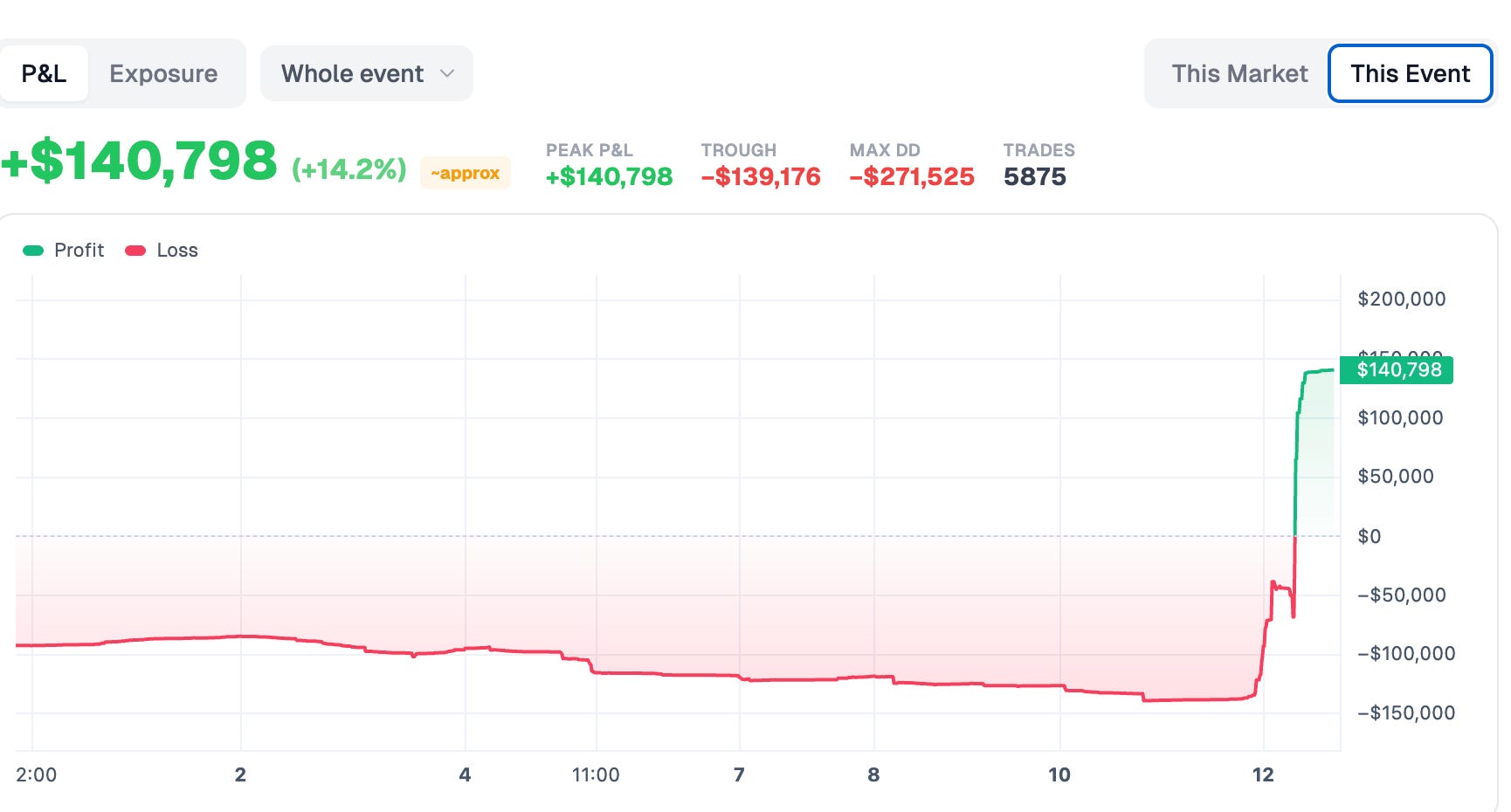
Following the stream of ridiculous headlines, propaganda, gaslighting, and lies from both sides exhausted me over these last few months. I lost interest in writing about predictions or really anything and questioned whether this is all worth it. I could have made more money and spent the time in a more useful way researching stocks instead of engaging with constant mental illness on X. I also lost money on a questionable Ukraine ceasefire resolution, which didn’t help for sure. Neither did some private issues that contributed to some terrible trading decisions.
Anywho, I’m belatedly publishing my April peace thesis, unedited from the day I wanted to publish it. If you want to skim some of it to see what aged well and what didn’t, be my guest. I think a lot of my analysis is strong and aged well, but I was also way off on some parts.
"There are decades where nothing happens; and there are weeks where decades happen."
Vladimir Ilyich Lenin
February 28th, 2026 was one of the dates when ‘decades’ were set in motion.
The US and Israel launched war — or as President Trump calls it “a military operation” — against Iran. But how will this “military operation” end? In this deep dive, I will analyze:
Actor profiles of the war parties — the USA, Iran & Israel: their objectives, constraints, biases, leverage & capabilities, red lines, off-ramps, and decision rules.
Actor profiles of the bystanders and mediators: the GCC countries, Pakistan, and the Iran-aligned Houthis.
The interaction effects between the different actors.
The main scenarios of how the war will end.
My forecast and trades.
TLDR: I believe the incentives and constraints align for the US and Iran to reach, even on short notice, a fragile high-level memorandum of understanding, which both will present as peace. The US, and specifically President Trump, want to end the war and declare victory. Iran wants the economic pain to stop and proclaim successful resistance. Israel doesn’t get to override an agreement but will try to influence the US to get its wish of a restart of the war. That would happen if the two main parties don’t look past their biases and cannot yield on maximalist demands.
The United States 🇺🇸
Objectives
The declared pre-war objectives
One of President Trump’s stated objectives on February 28th was to “defend[ing] the American people by eliminating imminent threats from the Iranian regime.” One month into the war, Secretary of State Marco Rubio felt compelled to publish a video clarifying the US’ war objectives:
Rubio explicitly linking Iran’s missile capabilities to its enrichment program was the most succinct and logical manner any US official made the case for the war. It probably should have happened before it started.
Zineb Riboua explained the math behind how China has been supplying Iran with necessary chemicals for missile production. Following this argument, the US had to act before Iran would have been able to overload its interceptor capacity:
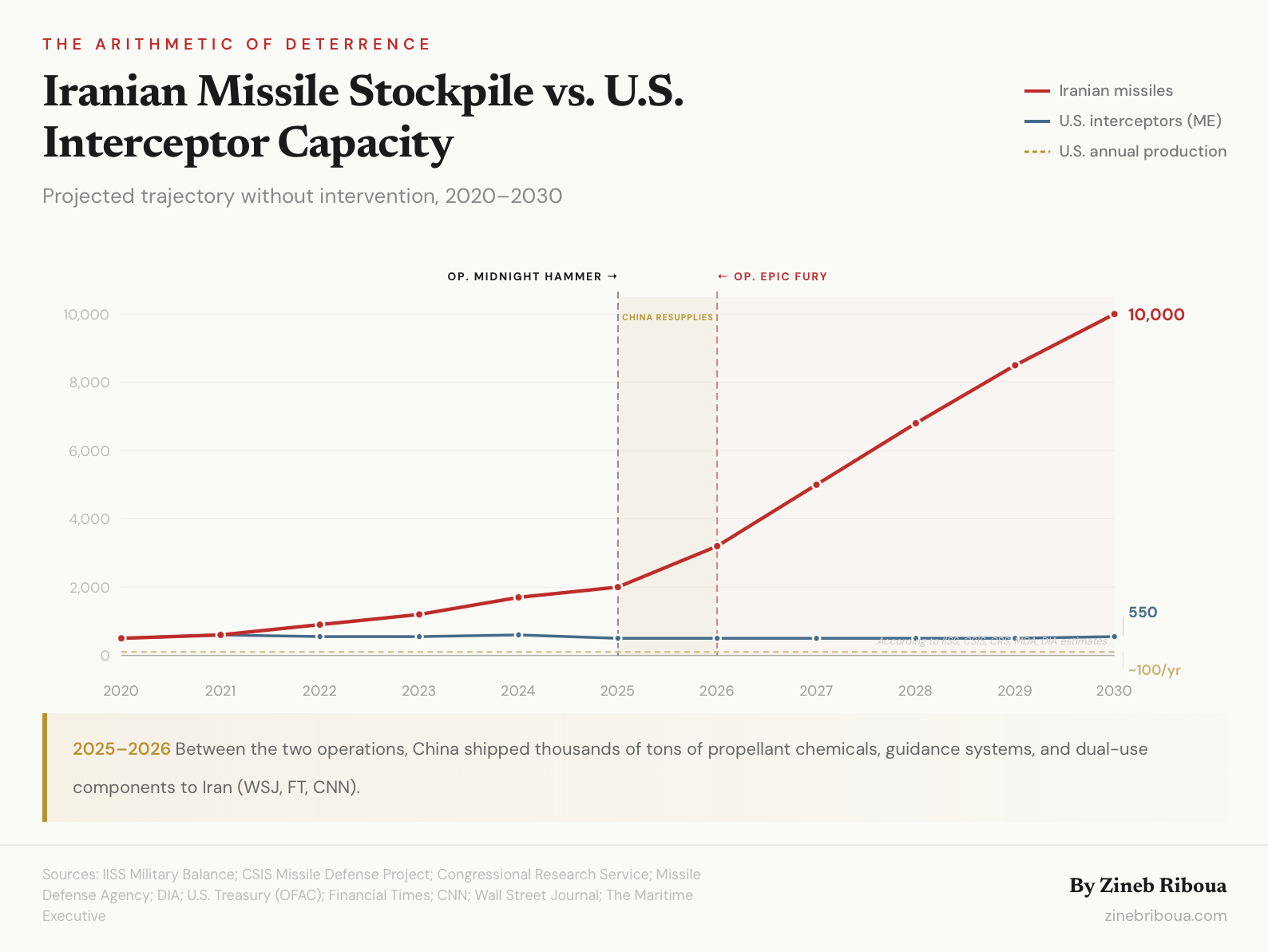
The stated operational objectives have been, according to the administration, largely achieved:
The Iranian navy is “gone.”
Their ability to launch missiles and drones is “dramatically curtailed.”
Iran no longer has the capacity to enrich uranium, according to Bibi Netanyahu.
But the objective of ensuring that Iran can never have a nuclear weapon has not yet been achieved. Iran remains in possession of over 440kg of enriched uranium, which is enough for around 10 nuclear bombs. The US tried (and failed) to get custody of it diplomatically. The war has not changed that fact. I see Iran retaining the uranium as a red line for the US: this was framed as one of the key demands in pre-war negotiations and cannot be easily discarded even with ‘narrative management.’

Finally, there’s regime change, an objective the US simultaneously did and did not have:
According to Trump’s ‘narrative management’ campaign (or gaslighting as some would call it), Iran’s president Masoud Pezeshkian, who assumed office in July 2024 when Joe Biden was in office, is the “much less Radicalized and far more intelligent New Regime President” of Iran.
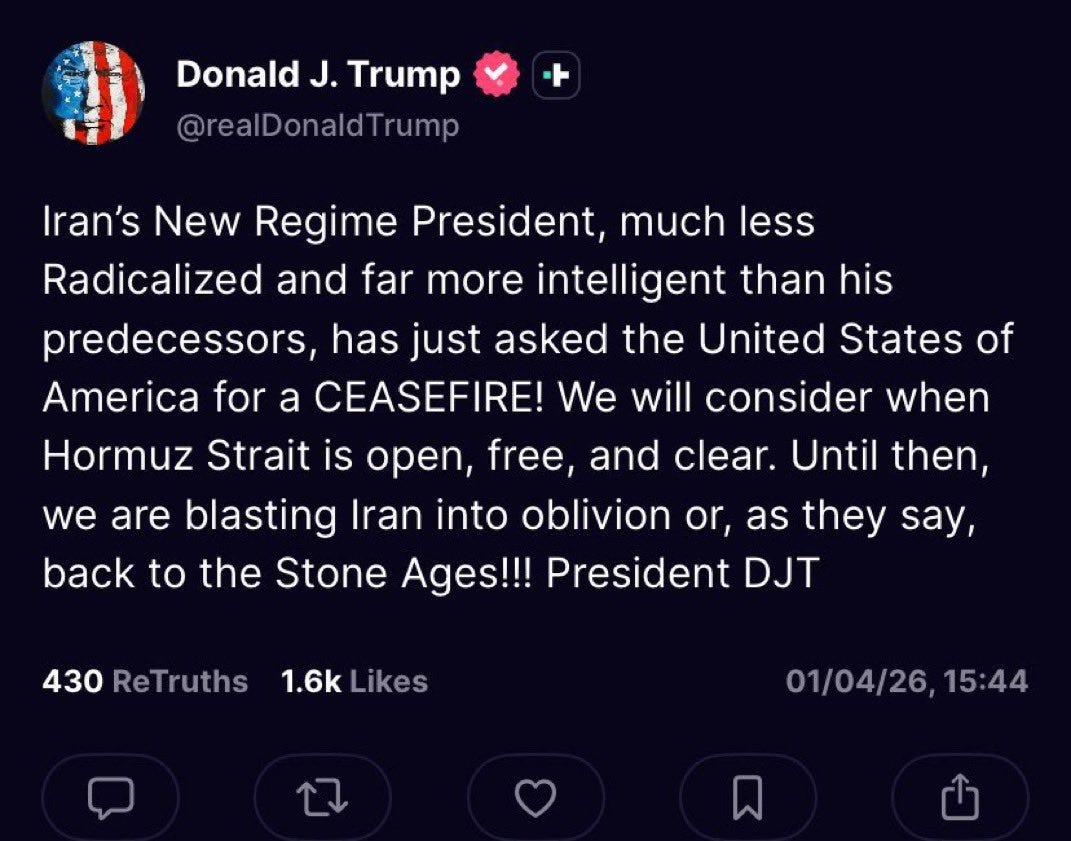
In reality, the assassination of Ayatollah (Ali) Khamenei led to Ayatollah (Mojtaba) Khamenei assuming the office of Iran’s supreme leader. Trump called him an “unacceptable” choice, but this does not seem to be a red line anymore. The US has been looking for a Venezuela-style solution of having a pliable leader. For lack of a better option, it has settled on Mohammed Ghalibaf, a trolling, corrupt regime insider that is at least open to talking to the Americans:

Intelligence professionals from both the US and Israel assess that real regime change would almost certainly take significantly more time and effort. Therefore, even though some reports claim Mojtaba Khamenei is “alive and functioning” and others assess he has “effectively no role” due to the severity of his injuries, the result is the same: change away from the Islamic Revolutionary Guard Corps towards a less hostile regime is unlikely.
The emergent objective during the war
Even though “nobody” in the Trump administration expected Iran to weaponize its geography, re-establishing free flow of energy through the Strait of Hormuz (SoH) only became an objective after the start of the war.
There are several problems with this emergent objective:
There is no clean military solution to ‘opening Hormuz’: at best, one vessel per day could be escorted.
Thus, a political solution establishing a new status quo in the SoH is the only realistic option. This new post-war equilibrium needs to prevent Iran from having a unilateral veto over a key maritime chokepoint.
Iran’s objective is to institutionalize leverage over traffic in the Strait. The Gulf Cooperation Council (GCC) countries are diametrically opposed to this. This makes finding a new equilibrium that does not grant Iran veto power over traffic through Hormuz challenging.
Trump has slammed European countries for being reluctant to contribute to a military solution. But apart from the fact that Asia is hit even harder, this misses the point. Any talk about mines in Hormuz (reportedly a dozen) or “humanitarian corridors” is distraction from the main problem: by making good on its threat to take the Hormuz chokepoint hostage, Iran discovered it holds considerable leverage. Now it has every reason to convert this leverage into permanent political and economic gains.
Constraints
Internal constraints
The main criticism levied against the administration has been that the US did not define a coherent strategic objective. According to Israeli intelligence veteran Dennis Citrinowicz, the US has been working with flawed assumptions, underestimating Iran’s capability and willingness to choke the SoH, and without a clear strategic objective or exit strategy. As long as operational objectives have not been fully achieved, this complicates finding a mutually acceptable off-ramp, and the risk of escalation remains.

Iran’s attritional hostage-taking strategy further implies:
Unilateral US de-escalation, possibly in combination with retreating from previous maximalist demands, risks implicitly validating Iran’s strategy. The US would lose face by de-escalating without tangible evidence of obtaining the uranium and/or degrading Iran’s missile capabilities.
Escalation risks exacerbating other key constraints that shape US decision-making: rising commodity prices, public disapproval of a wider and prolonged war, equity and bond market stress.
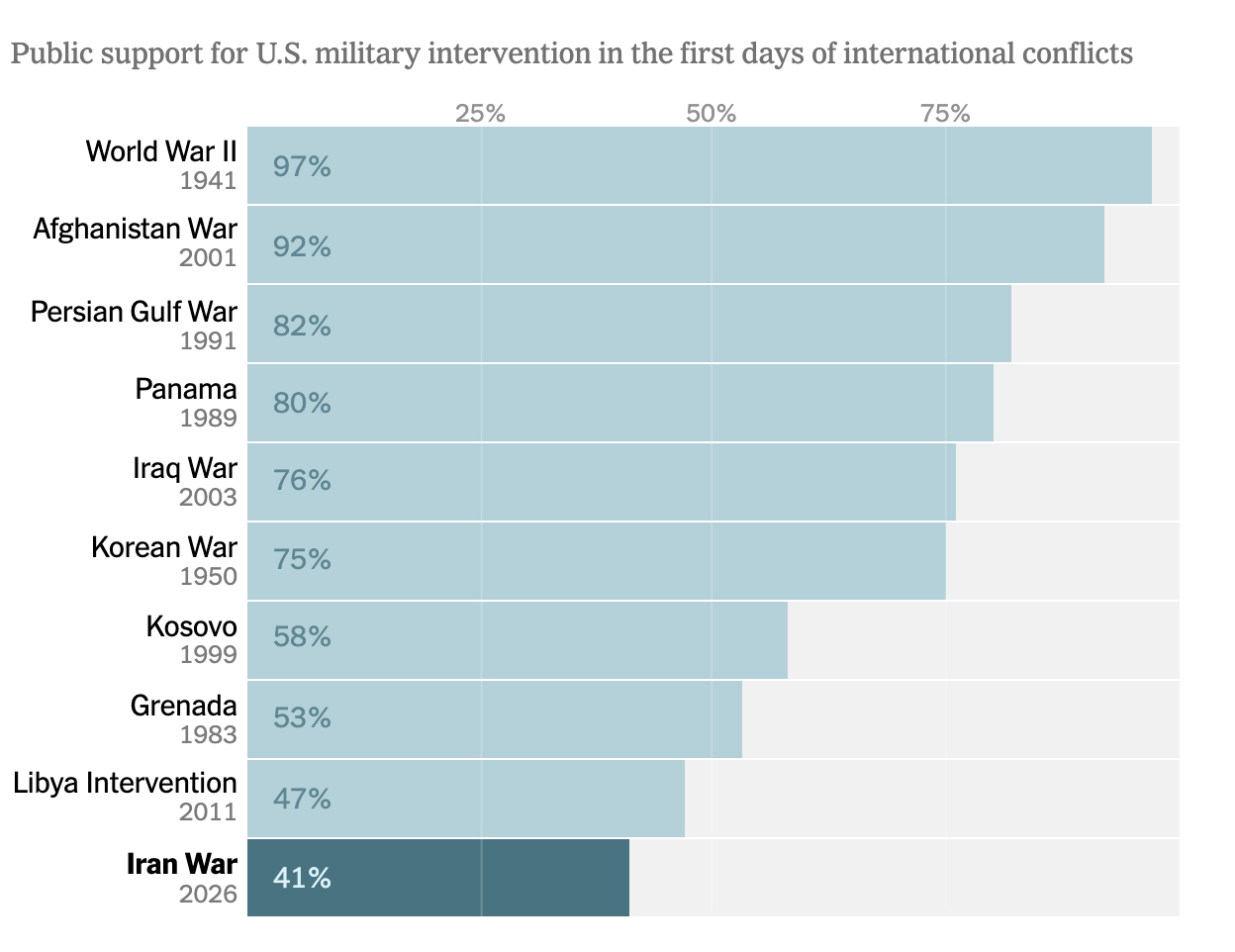
The biggest domestic constraint for the US have been rising commodity prices, which translate into higher gas prices. 74% of Americans said in mid-March that gas prices have increased in 2026. 48% said Trump and the administration are responsible. Surging gas prices have almost certainly significantly contributed to Trump’s plummeting approval ratings. Nate Silver’s Iran War Approval Tracker has public approval of the war at -15, up three percentage points from the lows just before the ceasefire. The New York Times found that even in the opening days of the war, it was the most unpopular war in modern history. Only 41% supported it, compared with 92% for the Afghanistan War and 76% for the Iraq War:
68% of Americans disapprove of Trump’s handling of inflation, according to an April NBC poll.
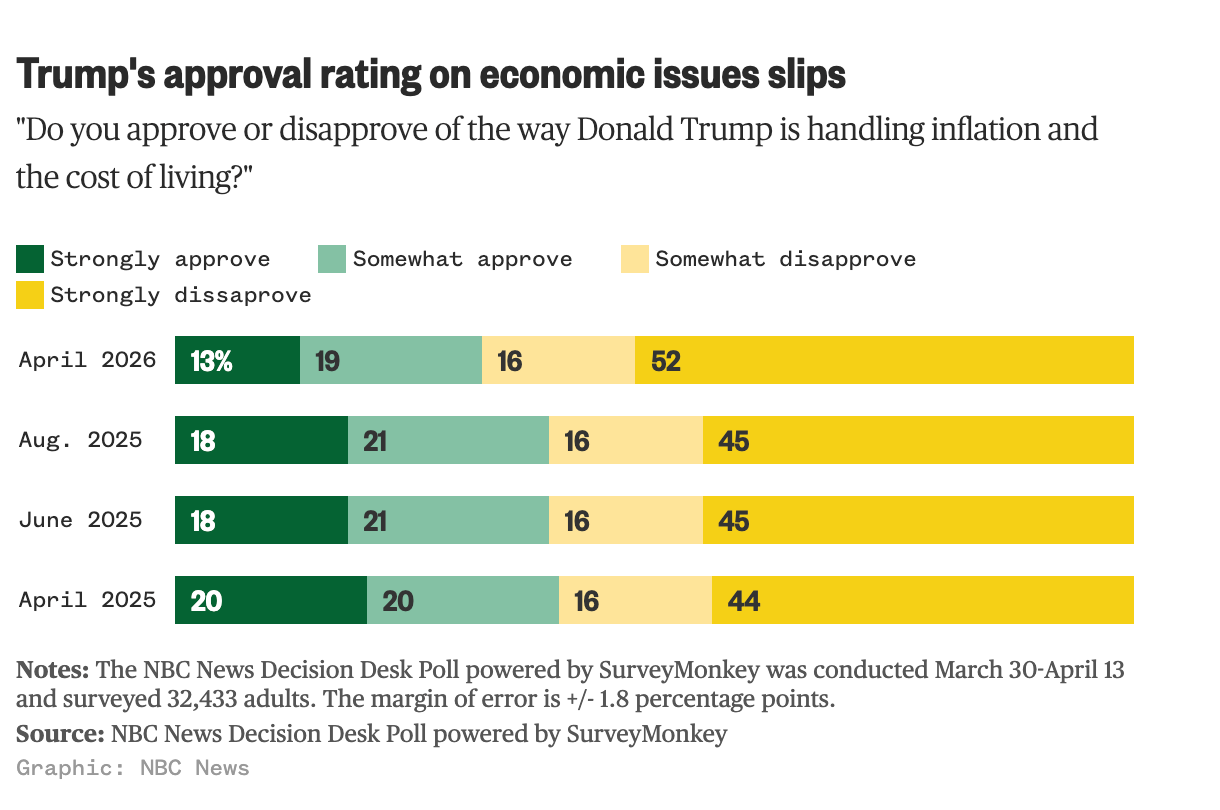
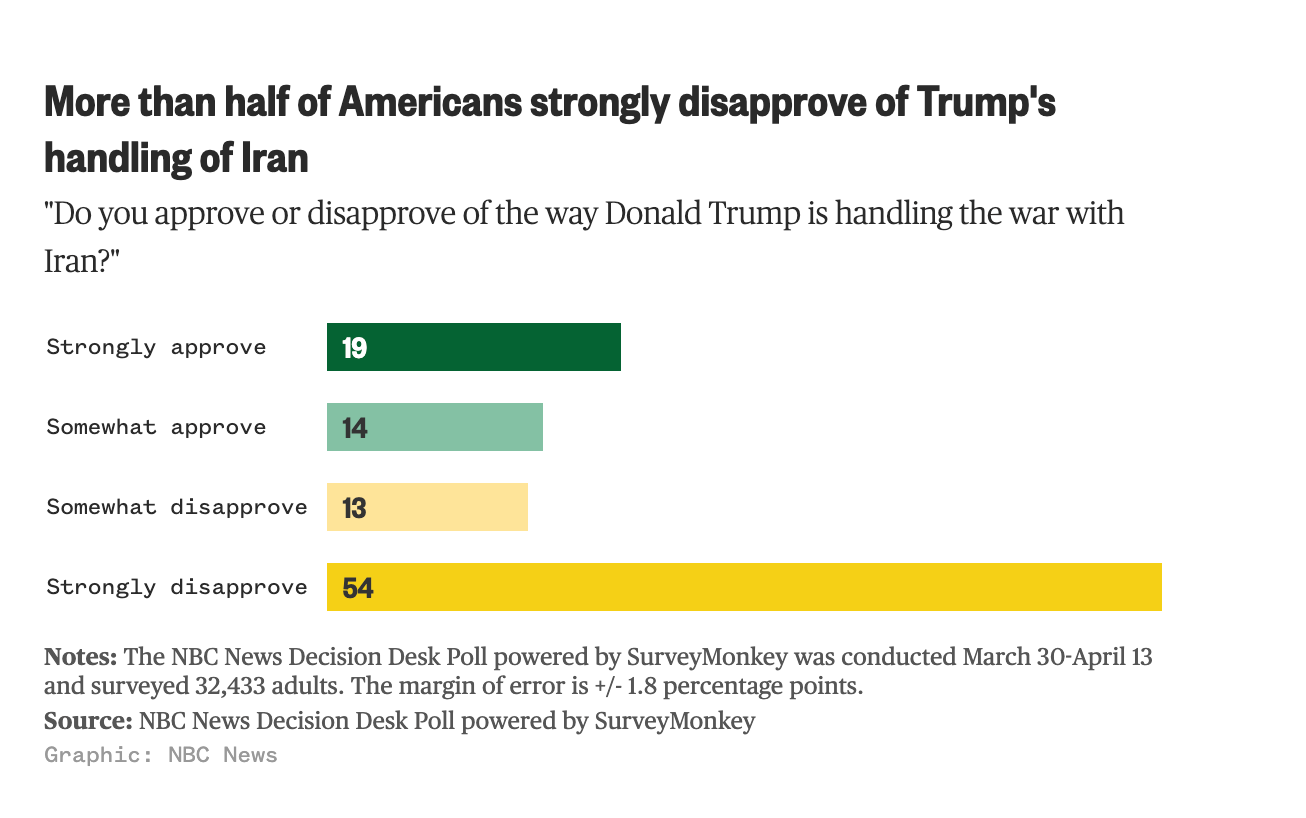
His 69% disapproval on the economy is a full 12 and 13 percentage points higher than that of Bush and Obama at this point in their second terms. Trump’s approval rating on the economy is almost identical to his approval rating on the war with Iran. 67% of Americans disapprove, with 54% strongly disapproving:
One survey I found says that 46% of Americans are very or extremely concerned about rising grocery costs. No wonder since the global supply chain shock for fertilizer will probably cause another bout of food price inflation over the next one to two years. That won’t help the GOP in the midterms or in the 2028 election if the conflict is not urgently resolved. And in the short term, it constrains the administration’s options for a significant escalation of the conflict.
But there is another constitutent Trump cares about just as much, if not more: the stock market.
Trump is famously sensitive to the stock market, touting gains even in his State of the Union speech. He’s done well to talk up the market and reverse the 10% drawdown on basically no fundamental changes. But one could also argue that even a mild drawdown was enough for Trump to put the war on pause. For a politician that prides himself on being unpredictable, he is remarkably predictable when it comes to market weakness.
These domestic concerns have already pressured Trump into pausing the war. He pretty much admitted to these constraint when he said that if it were up to him, he’d “take the oil. But unfortunately, the American people want to see us come home.” A longer-term negative externality is that by easing sanctions on hostile countries, the US undermines its reputation and its strategic position vis-à-vis its enemies and allies.
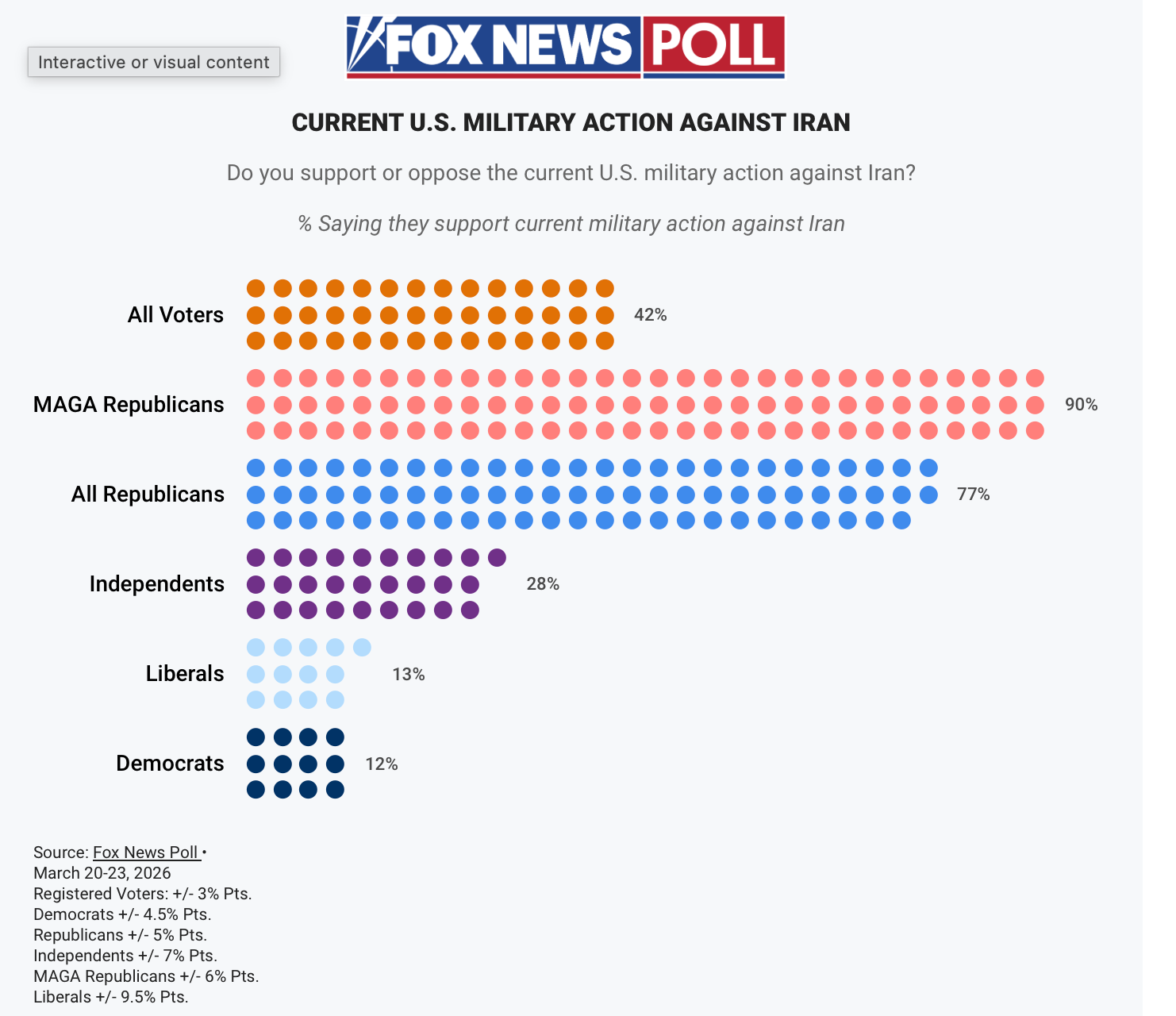
All of this was compounded by the self-imposed 6-week timeline to finish the war. 90% of MAGA Republicans support the war, but brittle support beyond the base risks elite fragmentation. Senators Graham, Cotton, and Trump-adjacent influencers like Laura Loomer have advocated for a resolute course to submit Iran. The more economy-focused advisers, such as Susie Wiles and JD Vance would prefer to see Trump move on.
There is no open conflict over this yet, but I see potential for a ‘knives out’ moment after the war or the Midterms. A preview of this is reportedly “paranoid” Pete Hegseth, who has pre-emptively sacked several high-ranking military officers. Trump has started his own series of firings
Either way, I believe fracturing cohesion reduces the probability of finding a sensible off-ramp, because the decision-maker has to integrate a cacophony of different opinions. The war will almost certainly not become a PR win. That means someone will be blamed when it’s over (and some say Pete Hegseth will have the honor.)
Finally, we have to take magazine depth into account. I’m no military analyst, so I can only cite more credible sources, such as Perun. He explains how the US has achieved sufficient air superiority to be able to sustain the war effort, even if that eats into its stocks of Tomahawks and air defense systems:
The anti-drone capabilities Ukraine offered in 2025 would sure come in handy now in the fight over Hormuz, but Trump says the US does not need any help with that. Regardless, this constrains how long the US can operate in the theater without diverting resources away from possibly more relevant future theaters, such as the Indo-Pacific.
External constraints
Restoring traffic in the SoH to pre-war levels will require a political solution. One way or another, the sides will find a compromise and a new, possibly worse status quo: either the US has to implicitly or explicitly accept Iranian leverage over Hormuz, or it has to manage GCC fallout in the form of canceled ‘deals’ and investments.
Diverging interests among the GCC states, Israel, and mediators like Türkiye and Pakistan complicate finding a mutually acceptable solution. The GCC states are neutral to hawkish on Iran and Israel as a belligerent to the war has an incentive to undermine diplomacy. The result: the aforementioned risk of a partial strategic defeat, where Iran’s capabilities are significantly degraded, but its leverage is converted into political and economic gains.
Biases
“I’d be harsh on Iran. They’ve been beating us psychologically, making us look a bunch of fools. One bullet shot at one of our men or ships and I’d do a number on Kharg Island.”
Donald Trump, 1988
Trump has always been an Iran hawk. But the biases in his personal style, as well as an institutional misunderstanding of Iran by the US significantly complicates finding a diplomatic solution.
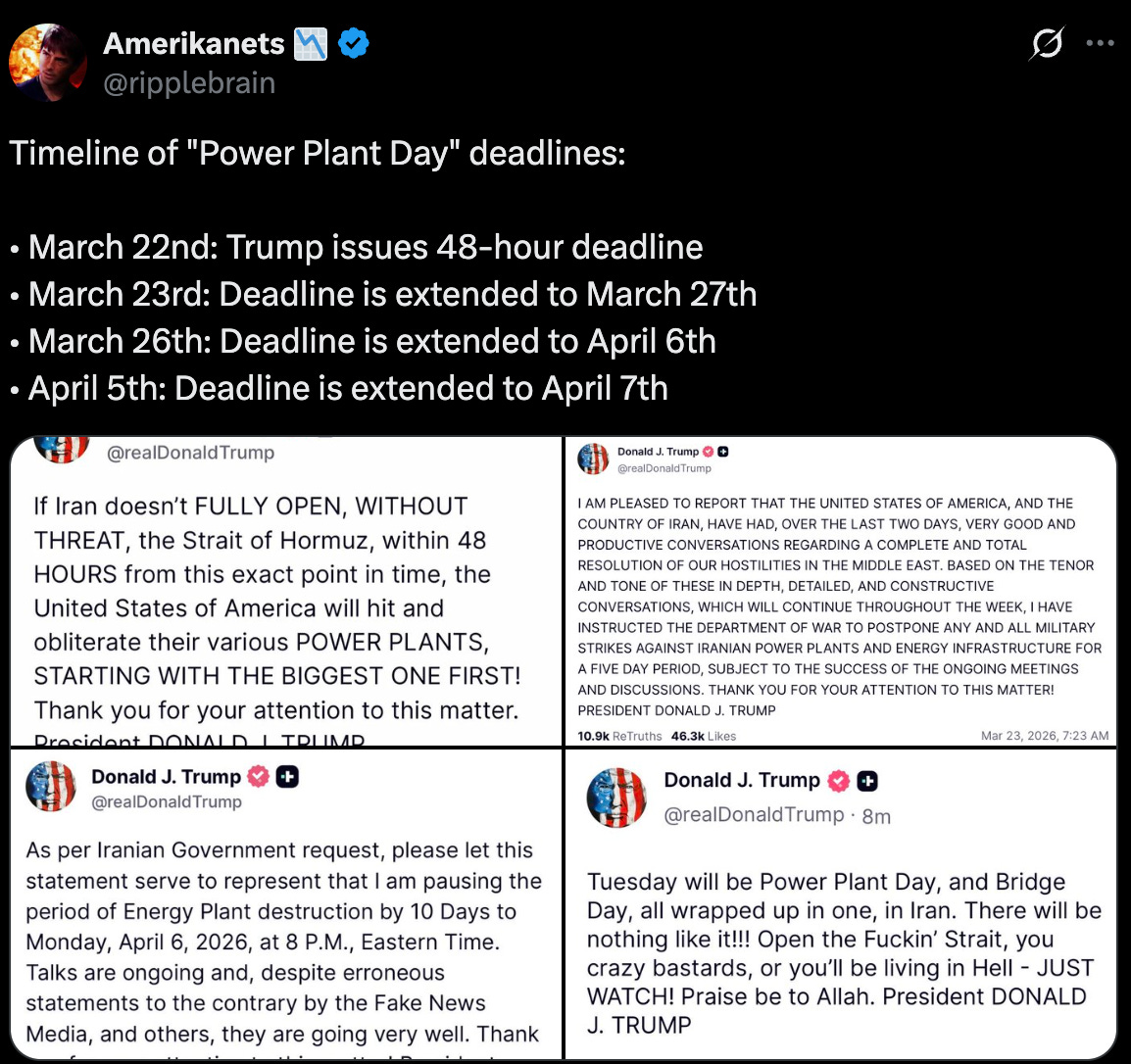
On the one hand, you have Trump’s tendency for self-imposed constraints, such as deadlines or red lines that narrow diplomatic room to maneuver. My personal opinion is that Trump’s “help is on the way” tweet in January is the original sin that ultimately led to the war. Had he not boxed himself in with a red line that he, unlike Obama, had to enforce, the war may have never happened.


This runs counter to Trump’s ‘strategic volatility’ with arbitrary deadlines that allow for market manipulation, but also debase your own negotiation leverage. Iranian leaders now match Trump in terms of social media gaslighting and market manipulation.
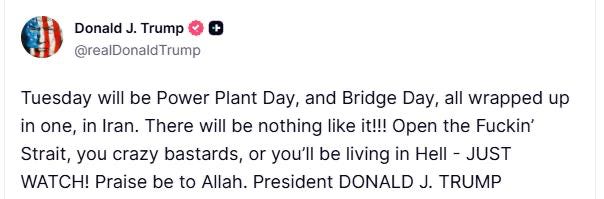
Then there’s Trump’s theatricality and his need for a climactic show of force. Take the “final blow” that was supposed to bring Iran to its knees or at least ensure the US leaves on a strong note. The same goes for his teaser tweets announcing different degrees of war crimes. It’s all one big movie and Donald Trump is the producer and main character all in one:
The administration is laser focused on framing the war’s outcome as a PR win, whether that aligns with reality or not. That’s a result of Trump’s zero-sum game mindset and his tendency to double down under pressure. This approach creates flexibility since there is no truth but only a narrative — it can sell eased sanctions on Russia as “short-term pain for long-term gain.” But it also drives up volatility and undermines trust by allies — see Europeans denying their airspace to US military operations.
Most importantly, it reinforces Iran’s distrust and undermines efforts of a negotiated de-escalation. Trump’s zero-sum game mindset acts against his own interests and his impatience and impulsiveness has aides keeping him away from real-time decisions to not fuck things up.
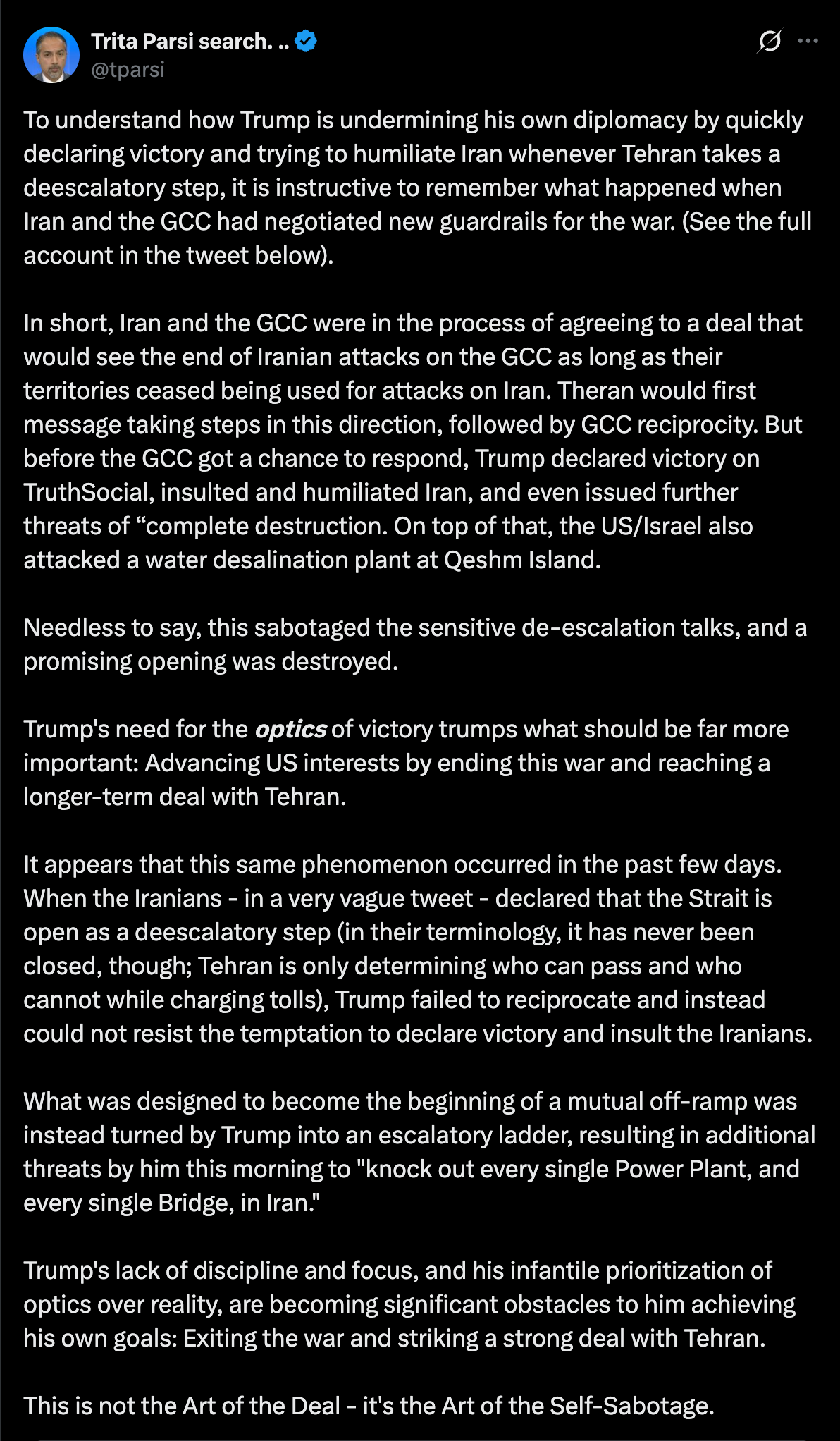
The administration also underestimated Iran’s willingness to retaliate and escalate even at the expense of its own economic and political interests. This speaks to a total lack of understanding of and willingness to engage with Iran’s position and red lines. The Hormuz quagmire is the logical consequence. In combination with the other biases, it leads to constrained negotiation space and boxes Trump in even more.

In my opinion, Trump only knows one negotiation strategy: leaning on the weaker party long enough until it accepts a rotten deal. This worked against Hamas but has failed in Ukraine. Whether this works in Iran will depend on Iran’s pain tolerance and their willingness and ability to raise the stakes under military and economic pressure.
Finally, the US does not understand the slow and technical Iranian diplomatic process. The US is currently led by marketers and businessmen. Iran is led by philosophers and engineers. Sending negotiators like Witkoff and Kushner that don’t grasp the intricalities of the Iranian approach discredits them in Iran’s eyes. The need for a ‘sloppy deal,’ where speed is of the essence to declare ten solved wars, means there may not be a deal at all.
Even though I don’t rate JD Vance as a negotiator, I think his presence as an opponent of the war is vital for showing Iran respect and presenting an acceptable counterparty for an offramp.
Capabilities & Leverage
The US has the capability to inflict fatal economic damage on Iran. But a kinetic escalation, such as destroying or seizing Kharg, risks retaliation and imposing more economic and political costs: the benefits of successful escalation, such as regime change or at least a more pliant Iranian regime are backloaded. They are also subject to enforcement and control. But the costs are immediate — see rising commodity prices and falling approval ratings.
The US also has political leverage over Iran: it can offer sanctions relief, though this is conditional on political will. It would also require monitoring Iran for compliance, something the Trump administration probably has no patience for.
Red lines
The lack of clearly defined strategic objectives complicates defining clear red lines. My best guesses are:
The US wants custody of and/or strong, verifiable limits to the Iranian nuclear program. However, this directly contradicts Iran’s red line.
The US wants limits to the Iranian missile program. However, the exact limits are probably up for negotiation.
The US does not want a ‘forever war’, in other words a ground invasion with a sizeable number of forces staying after the war, similar to what happened in Iraq.
What I don’t think real red lines are:
Institutionalization of Iran’s influence over the SoH — Trump has suggested he “and the next Ayatollah” could control it together.
“Security guarantees” for Iran, as long as the US’ red lines are respected.
I believe the main problem is the uranium and Iran’s insistence on the right to enrichment. This also happens to be the most tangible objective and the very reason why the US, in theory, launched the war to begin with.
Off-ramps
There’s a similar problem in terms of off-ramps: ‘strategic volatility’ gives you flexibility but complicates finding clear off-ramps. My best guess was that another show of US military might (the “final blow”) would create leverage for the US before climbing down from maximalist positions in negotiations.


I guess that has played out. The diplomatic off-ramp could be a nominal vow to achieve the goals that could not be achieved militarily. The problem remains the same: will the US insist on denying Iran the right to enrichment and does the US want custody of Iran’s uranium?
Key uncertainties
I’m uncertain about the US’ willingness to escalate and pain tolerance. Trump has been setting and delaying deadlines for fun.
In theory, the US ‘holds the cards:’ economically choking a regional power under decades of sanctions should be easy and increase the chances of Iran coming to the table. The naval blockade is the latest attempt to do so, but I wonder what the US would do if Iran does not fold under this pressure as the reporting suggests. Neither Trump nor the American public want or seem to expect the war to resume at this point.
My propositions for the US
Below, I will outline several propositions with varying degrees of confidence for how the US will behave.
High confidence
The US’ biggest constraint is domestic economic pain and disapproval: the president is mostly swayed by equity and bond market behavior and somewhat, but less so, by rising gas prices.
Medium confidence
The US is ready to temporarily escalate further to increase leverage and create room for ‘narrative management.’
The US is willing to dilute its red lines if the equity and/or bond market signals distress, similar to what happened after ‘Liberation Day.’
Low to medium confidence
The US would sacrifice goodwill of allies at the expense of easing said market pain — think announcing an end to military operations even without a tangible solution to Hormuz in sight.
My US decision rule
The US is most likely to pursue a path that allows it to declare victory without incurring significant short-term economic or human costs.
The main constraints are the lack of a clear strategy guiding policy and its sensitivity to financial markets. The US’ decision-making is highly dependent on President Trump’s perception of strength and his preference for coercion, while simultaneously underestimating Iranian resilience. The US is able to inflict terminal damage on the Iranian regime, but is more likely to settle for a negotiated agreement when financial markets force Trump’s hand.
Iran 🇮🇷
The declared pre-war objectives
Before the war, I assessed Iran has three objectives it wants to achieve:
Regime survival and resistance: preserving the regime is the highest priority and anything can be sacrificed at its expense, provided it does not directly contribute to regime survival. Despite continued decapitation strikes, the regime remains, for now, firmly in control domestically.
Deterrence: Iran needs to re-establish deterrence to ensure a third — and potentially fatal — war does not follow. That is why Iran has transformed its traditional measured retaliation into “forward defense.” It escalated asymmetrically against US allies and is willing to fight a war of attrition. The Islamic Republic has been betting on the US growing tired of the war’s economic costs before Iran does, but the naval blockade may change Iran’s calculus.
Respecting Iran’s sovereignty: the right to enrichment, including keeping custody of its uranium and the implicit acceptance of its missile program are not only matters of national security for Iran. They are a symbol of Iran’s sovereignty and its achievements as a nation. Iran is willing to negotiate on technicalities but not on its fundamental rights to either.
The emergent objectives during the war
The Iranian regime believes it is improving its strategic position in the region. That is why Iran has also been steadfast about its emergent objectives:
Security guarantees: Iran wants a backstop against a new attack by the US and Israel. I interpret this as a guarantee by an allied country like Russia or China or an implicit or explicit acceptance of Iran’s right to enrichment and, by extension, the risk that Iran chooses to build a nuclear weapon.
War reparations: Iran demands financial compensation for the damages incurred by the American and Israeli airstrikes. This could come in the form of sanctions relief or, possibly in addition to that, as a tacit or explicit acceptance of Iran’s right to tax passage in the SoH.
Institutionalizing a new status quo in the Strait of Hormuz: Iran sees its chokehold of Hormuz as the strongest deterrence. It intends to translate this into the right to tax passage, possibly in cooperation with Oman or as part of a multilateral framework.
Constraints
Internal constraints
Iran’s biggest trump card is ‘mutually assured economic destruction’ by keeping Hormuz closed and escalating against regional energy infrastructure. Still, the US and Israel have steadily degraded its military capabilities. Israel assesses Iran’s operational missile launchers at 25% of its pre-war levels.
While Iran may be able to sustain this tempo for years, the regime’s bet that the nominally stronger enemy becomes exhausted first does not look all that sound anymore:
The Wall Street Journal reported that the cost to rebuild damages may be as high as $270 billion — more than 60% of Iran’s 2024 GDP.
At the same time, the naval blockade may cause Iranian oil to be shut in in the next two weeks to two months.
The internet blackout is hurting the Iranian economy.
Airstrikes targeting infrastructure hit outward facing parts of the economy, choking off foreign exchange revenue streams.
Extorting tankers in the SoH has reportedly not been the cashcow the regime hoped for.
Iran’s currency is in hyperinflation, collapsing under international sanctions, systemic corruption, and a banking crisis.
All of that compounds Iran’s already massive structural dysfunction. For instance, Iran faces perennial water crises due to mismanagement and incompetence. The economic weakness, in combination with international isolation and failures since 2023, means the Islamic Republic has lost its moral authority. It is a ghost state, where authorities can coerce the population through violence but are no longer seen as legitimate.
Another constraining factor is that continuing decapitation strikes are disrupting Iranian command and control. Iran’s “mosaic defense” strategy means every position has dedicated successors. But eliminated human capital cannot be replaced without churn, and the remaining leadership has difficulty communicating and coordinating. It also causes a loss of cohesion, be it militarily by striking the wrong countries, or diplomatically by not speaking in unison.
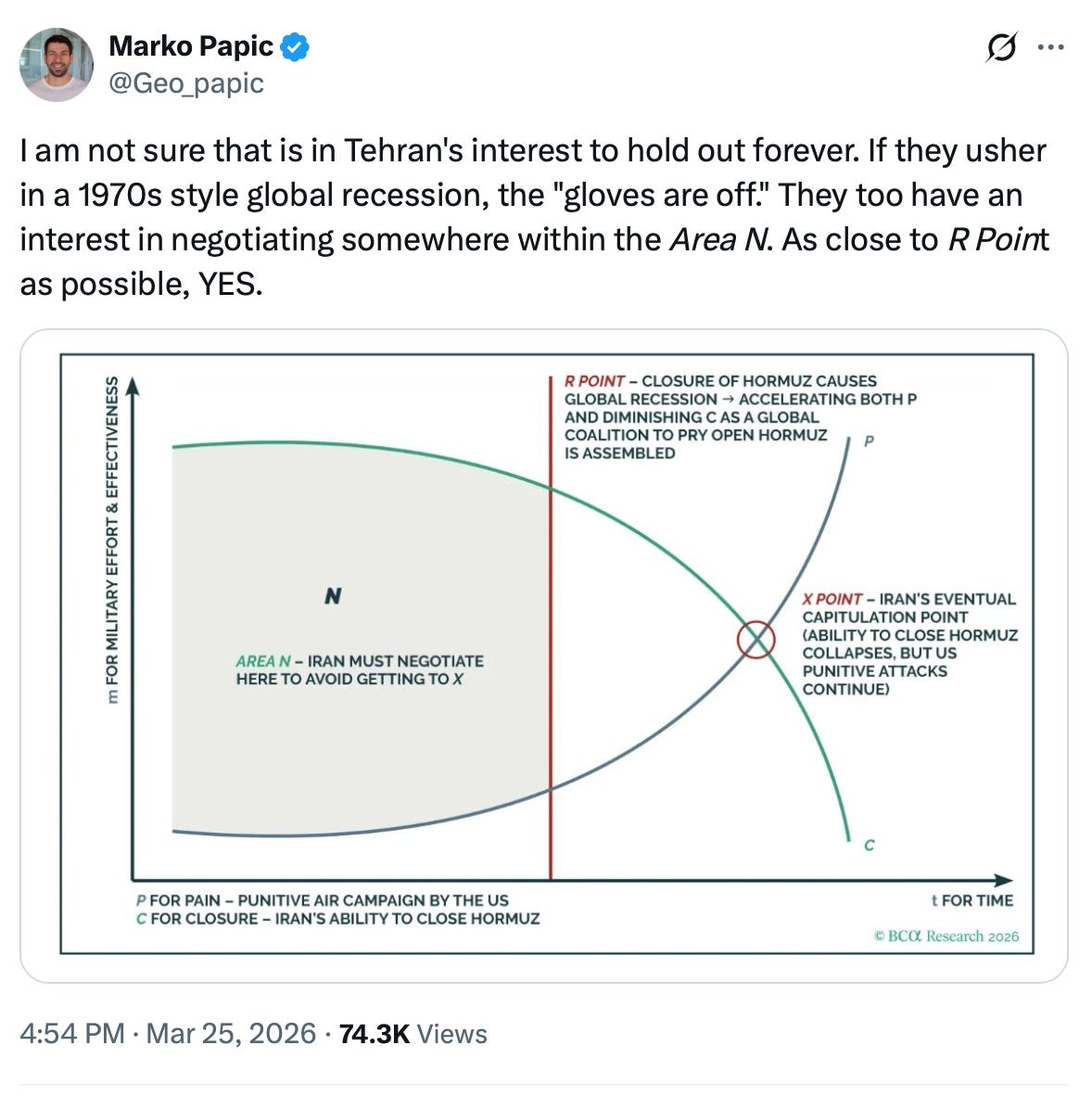
This internal power struggle empowers the hardliners and limits the options for a face-saving off-ramp. But under the pressure of increased US airstrikes or even ground troops, it could backfire: the regime may have to retreat from red lines if its survival is at stake. Thus, Iran is in a race against time and American endurance to cash in on the leverage it currently holds.
External constraints
The Hormuz hostage is an extractive strategy: it creates leverage for the Islamic Republic by denying other parties access. But Iran’s asymmetric warfare of disruption and attrition can be nullified with enough will to bear the short-term costs. It also isolates Iran vis-á-vis its neighbors, which are already neutral at best and hostile at worst.
Thus, a fresh bout of regional escalation risks drawing a GCC coalition into the war and potentially expanding allied regime change objectives. But Iran has no real allies willing to put ‘skin in the game.’ It also lacks capabilities that meaningfully backstop regime survival, such as nuclear weapons. In essence, Iran’s strategy relies on the US not daring to call and raise the stakes. Its uranium is the only valuable bargaining chip the regime has to trade for relief of structural problems. Yet trading it would mean giving up the only viable path to ironclad deterrence against future military action.
Bias
One Iranian bias is a culture of mistrust and the need for reassurances by third parties. Trump went back on the JCPOA nuclear deal negotiated by Obama and attacked Iran twice during negotiations. That’s why the Iranians no longer trust the US to be good for their word and sought third-party guarantees even before the war. And it explains why Iran now wants a major power like China to put skin in the game as security guarantor. Absent such an agreement, I would expect Iran ultimately to try to dash to a bomb and, at some point, withdraw from the non-proliferation treaty.
Decapitation strikes disrupt the state’s cohesion, but they also complicate an agreement for another reason: who makes the deal is as important as what deal is made.
Amwaj.media reported before the war how a deal with the Biden administration fell through, because the Trump admin’s current favorite Mohammad Bagher-Ghalibaf slid into then-president Rouhani’s attempt to revive JCPOA. More recently, a comprehensive peace proposal by former Foreign Minister Javid Zarif was denounced as a “fantasy.” One of the main obstacles to a deal on the Iranian side is empowering one set of actors to make an agreement.
Iran considers the US’ position unacceptable, because the Iranian nuclear program is seen a source of authority and legitimacy. And not only for the regime, but for the revolutionary movement as such. The right to enrichment is not only, or even mainly, a source of deterrence. It is a source of national pride. Renouncing it would be renouncing one of the feats that make the Islamic Republic a sovereign and independent state. Hence, compromising on this at proverbial gunpoint — one of Trump’s many deadlines — would be capitulation. Iran as a thick culture defines security not only in physical terms, but also how others see it. Former Iranian president Hassan Rouhani explained it over a decade ago:
“To us, mastering the atomic fuel cycle and generating nuclear power is as much about diversifying our energy resources as it is about who Iranians are as a nation, our demand for dignity and respect and our consequent place in the world. Without comprehending the role of identity, many issues we all face will remain unresolved.”
That’s where the Iranian and American worldviews collide: the Trump administration is a strictly materialist and realist one, but Iran is asking for engagement based on equality and mutual respect. Under this framework, the Islamic Republic believes win-win outcomes are possible, but zero-sum pursuit leads to “disastrous consequences.” Once you understand this framework, you understand why the Islamic Republic can yield on its maximalist demands: flexibility becomes part of resistance and being able to resist the enemy creates security.
Hence why Iran for a long time chose flexibility by resisting via measured retaliation. But the regime learned its lessons from the 2025 war and determined that deterrence could only be established through rapid escalation. I believe Iran drew further lessons from history that shape its approach:
The Iran-Iraq war in the 1980s was the last existential war for Iran and nobody came to help.
Therefore, Iran can only rely on itself. It cannot win militarily, but it can drag the US down into a spiral of chaos.
The US’ pain threshold may not be high when American blood is drawn: the United States backed down after the 1983 Beirut barracks bombings.
But this can also cause Iran to overplay its hand. For one, Iran is already short on allies and risks alienating the few backers it has: while China continues to provide intelligence to the IRGC, it does not provide military support openly just as is the case with Russia. Iran’s axis of resistance has been disintegrating since 2023. The Arab countries have not entered the war on the side of the US and Israel, but they have also not pushed against it. Zineb Riboua argues that Iran risks confusing martyrdom for waning influence and hard power and may be underestimating the appetite of GCC states to push back against its plans for Hormuz.
Capabilities & Leverage
Iran’s leverage is tied to its military means of suppressing commerce through the SoH:
Its cost-effective asymmetric warfare can be sustained for a long period of time.
Iranian escalation against energy infrastructure targets in the region remains possible. The Houthis as Iran’s semi-independent partner also retain the right to enter the war on Iran’s side.
Iran’s new defense strategy of attrition and regional cost distribution does not aim to minimize losses but bets on US war fatigue.
Whether that asymmetric military leverage can be converted into political leverage is unclear and a key challenge for the Iranian regime as it tries to find a viable exit strategy.
Red lines
I see Iran’s red lines as closely tied to its defense strategy and worldview:
The nuclear program serves as the remaining source of legitimacy for the regime. I do not see Iran surrendering all of its enriched uranium under any circumstance or any of it to the United States. I could see a token gesture of sending some uranium to a friendly country like Pakistan.
Deterrence must be established again at least nominally. This can either happen through security guarantees, a unilateral US withdrawal from the war, which would be framed as successful Iranian resistance, or accepting the ‘new status quo’ that Iran’s leverage created in the SoH.
Any agreement must respect Iran’s frame of resistance and be able to be sold as a win. Iran will not agree to any deal that does not respect the previous red lines and is framed as an ultimatum.
Off-ramps
I believe Iran is flexible in terms of off-ramps as long as its red lines are respected:
A tacit acceptance of Iran’s right to enrichment, albeit under IAEA supervision.
Tacit or explicit acceptance of Iran’s influence over Hormuz.
Verifiable sanctions relief in exchange for concessions.
Key uncertainties
I see a possible gap between Iran’s maximalist public stance and more pragmatic views behind the scenes as the major uncertainty. Authoritarian countries are per se difficult to read. Even more so if they suffer from major leadership churn and infighting between factions. I consider it entirely plausible, even likely that certain Iranian leaders are more open to an agreement with the US. But the size of this gap is difficult to estimate during the fog of war.
That makes the durability of the mosaic defense another uncertainty: how long can Iran’s chain of control sustain decapitation strikes, how deep are its reserves of missiles and drones really, and how long can Iran economically and militarily keep the SoH closed?
Finally, the status of Iran’s enriched uranium is anyone’s guess. If the IAEA doesn’t know about it, neither do I:
My propositions for Iran
High confidence
Iran is building its asymmetric defense around the ‘Hormuz hostage’ for as long as possible. This is Iran’s strongest deterrence and Iran will rather overplay than underplay this card.
Iran sees the nuclear program as a source of sovereignty and legitimacy and will not compromise on its existence but only on technicalities.
Medium confidence
Iran signals high pain tolerance but real pain tolerance may be lower due to internal and external constraints. The gap between its public and real position is impossible to assess.
Iran is psychologically scarred by consecutive attacks during negotiations and will be more rigid in negotiations with regards to its red lines.
Low to medium confidence
Iran’s potential underestimation of US pain tolerance and past experiences of success by resistance and failure by negotiation could cause it to overestimate its capabilities and leverage.
My Iran decision rule
Iran is most likely to pursue a path that re-establishes deterrence by imposing economic costs on the US and its partners.
It prioritizes regime survival and sovereignty but is constrained by its lack of capabilities and allies, while suffering from churn in its leadership and military capabilities. Iran’s decision-making is influenced by lessons learned from past wars. It retains leverage through its cost-effective deterrence strategy but is vulnerable to a sustained economic war of attrition. Iran is unlikely to meaningfully compromise on its nuclear program or relinquish its newly-found leverage in the SoH.
Israel
The declared pre-war objectives
Israel’s war objectives have been consistent from the start:
Prevent Iran from developing nuclear weapons and ballistic missiles that threaten Israel.
Eliminate command and control structure of the Iranian regime.
Eliminate the wider military of the Basij forces, one of the branches of the Islamic Revolutionary Guard Corps.
This should create the conditions for the Iranian people to bring down the Islamic Republic — a key difference in the objectives between Israel and the United States. Specifically Trump sees bringing down the Islamic Republic as a “bonus” and pushes back against Netanyahu’s attempts to foment a popular uprising that could spark another massacre against civilians.
These objectives have been achieved to varying degrees of success. Netanyahu said three weeks into the war that Iran has “no ability to produce ballistic missiles” and can no longer enrich uranium. At the same time, he is wary of halting the war with Iran in possession of its enriched uranium.
Netanyahu’s personal objectives
A popular talking point is Netanyahu’s long-standing personal objective of bringing down the Islamic Republic:
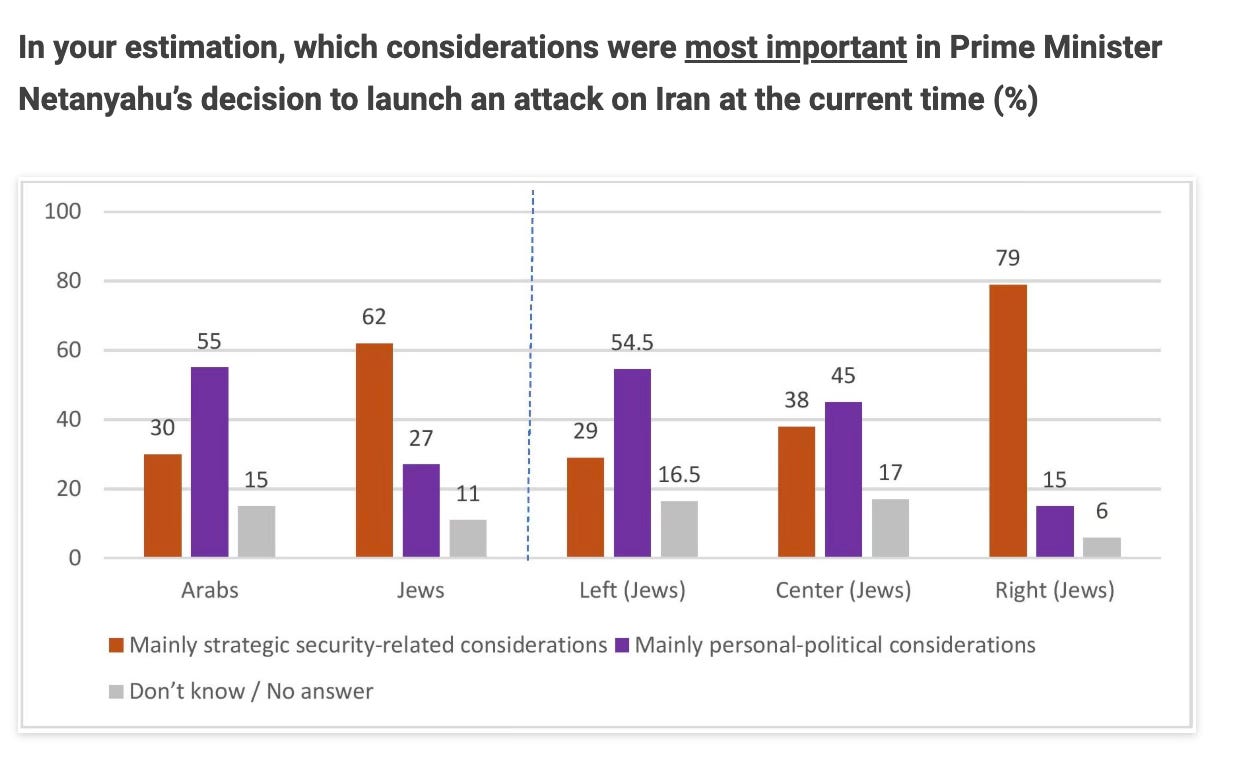
According to a survey by the Israel Democracy Institute, more than half of left-leaning Jews and 45% of centrists think personal-political considerations were Netanyahu’s primary motivation. I subscribe to the argument that this was Netanyahu’s last window of opportunity for decisive military action against Iran with America’s support.
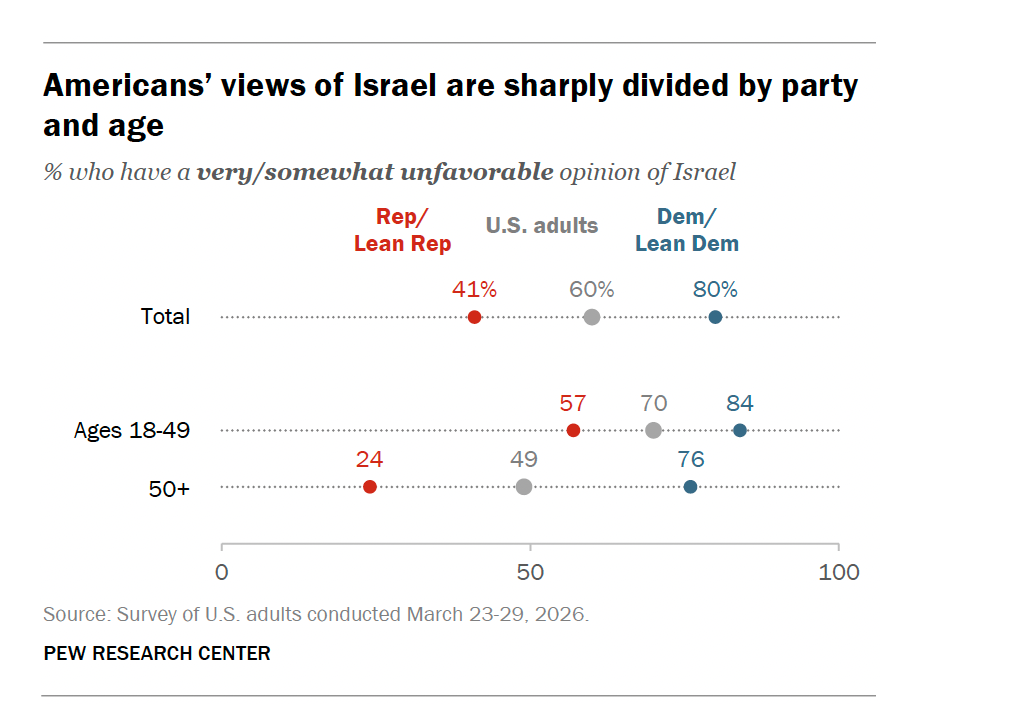
In light of more Israel-critical younger generations, this may not be possible under future more isolationist or Israel-critical administrations. According to an April Pew Research poll, 60% of all Americans and 70% of those aged 18-49 have an unfavorable opinion of Israel. 59% of Americans have little or no confidence in Netanyahu to do the right thing regarding world affairs.
Domestic political considerations may also play a role for Netanyahu. He is seeking a presidential pardon over a corruption trial and has until October to call an election and schedule a vote within three months. “The road to the polling stations runs through Washington and Tehran,” according to Israeli government ministers. Even though a majority of first-time voters identify as right-wing, Netanyahu may find it difficult to form a coalition. This dynamic incentivizes Netanyahu to prolong the war for as long as it remains politically feasible before ending it on a high note ahead of elections.
Constraints
Internal constraints
Public support for the war in Israel is fairly high but falling. The Israel Democracy Institute found that the share of strong supporters among Jews dropped from 74% to 50% over the war’s first month.
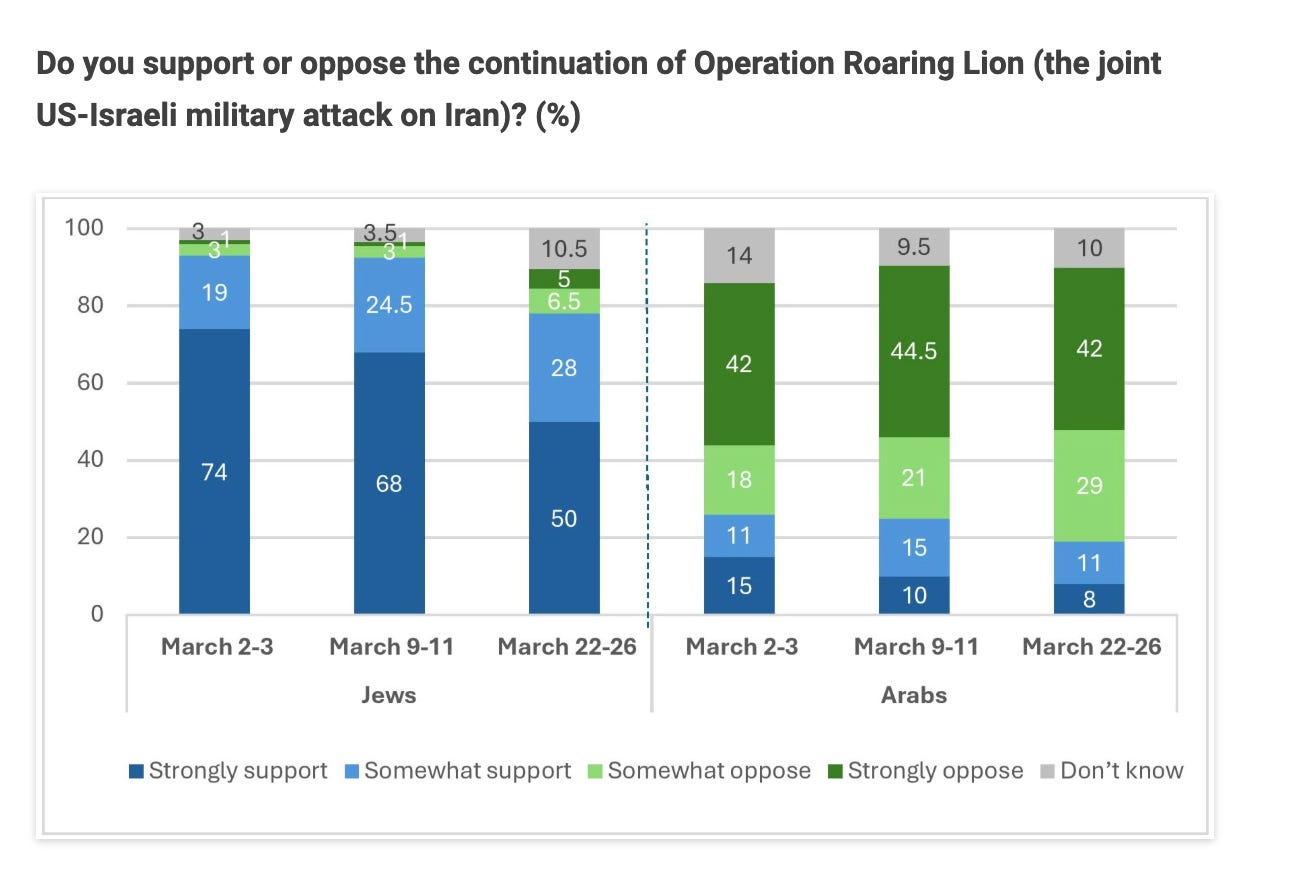
But even though — or maybe because — only 31% of Israelis think the Islamic Republic has been significantly weakened, 61% oppose the ceasefire. I interpret Israeli public opinion as war fatigue but a desire to continue until a more pronounced victory.
While public opinion is not the primary driver of policy, the Israeli Defense Forces are stretched and potentially exhausted after fighting on several fronts since 2023. Its Chief of Staff has warned the military could “collapse in on itself” due to operational demands and manpower shortage. There also seems to be a rift between the IDF leadership and the political leadership on the wisdom and feasibility of a ground offensive to destroy Hezbollah in Lebanon.
Israel lacks the military means to accomplish certain objectives, which only the US military can — see the Fordow bombing in 2025. Though Israel has not set an explicit objective regarding the enriched uranium, a possible exfiltration could only be attempted by the US. Netanyahu’s approach to rely on military solutions alone is also not free from criticism in Israel: his attempt to trigger regime change via decapitation strikes has failed, similar to how Hezbollah and Hamas remain weakened but functional in Gaza and Lebanon.
Finally, Israel is taking a fair share of damage from Iranian retaliation. I’m not familiar with the Israeli interceptor depth, but repeated strikes on high-profile targets, such as the oil refinery complex in Haifa, mean that Israel also cannot indefinitely sustain the war without incurring significant costs.
External constraints
Israel is to a great degree at the mercy and goodwill of the US and specifically Donald Trump for the intensity and duration of the war. This makes Israel’s constraints a function of US constraints. Trump called Israel back for a strike against Iran’s South Pars gas field, even though it was reportedly coordinated with the US. While Netanyahu wields great influence in the White House, Trump has gone against his wishes when he sees an opening to take credit himself: see when he overruled Israeli objections to achieve the ceasefire in Gaza. The latest such episode was the announcement of a ceasefire in Lebanon to give the US a chance to strike a deal with Iran. 51% of Israelis oppose this ceasefire, but Trump sees it as another mosaic to “peace in the Middle East.“
The alignment between Israel and the GCC states is questionable. For one, Israel has strong ties to some, such as the UAE. But that relationship, too, could get strained if Israel were to ever fulfill Netanyahu’s dream of routing oil through Mediterranean ports in Israel rather than in the Arab peninsula. The GCC states want to see Iran weakened but they fear a power vacuum if a fall of the Islamic Republic were to remove a key pillar of the region. For Israel though, a disintegrating Iran is preferable over a weakened but resisting Iranian state.
Netanyahu’s plan to trigger an uprising through air strikes and assassinations alone is unlikely to work, according to intelligence assessments. Iran’s resilience to decapitation strikes has frustrated Netanyahu. That raises the question whether Israel can and wants to double down on the war effort, because the current government budget can not sustain operations for much longer. Without US military support, Israel would have to accept whatever ‘gains’ have been made thus far.
Bias
If you have 30 minutes to spare and want a solid overview of who Benjamin Netanyahu is, watch John Oliver’s recent segment on him:
Similar to the US and Trump, Israel’s current policy style is intertwined with Netanyahu’s beliefs. One of Bibi’s key tenets is to prioritize political survival over almost anything else. That is what he did masterfully after the October 7 attacks by “placating and manipulating allies within his coalition and benefactors in the United States government, often all at once,” as a New York Times feature put it. One of his guiding principles is “a strong Jewish state that refuses any compromises.” That is downstream of the zionist “Iron Wall” ideology, contending that Zionist colonization can only develop under a metaphorical iron wall the native Arab population cannot breach.
The extension of that is Israel’s tendency under Prime Minister Netanyahu to test boundaries and err of the side of going too far, such as striking oil infrastructure in Tehran:
It also implies less reluctance to act against diplomatic norms in decapitation strikes, such as potentially targeting Iran’s foreign minister Abbas Aragchi — a regular guest on US news broadcasts. Israel under Netanyahu favors military solutions over diplomatic ones. Hence his pitch for Israel to become “super-Sparta” in a world full of enemies. In practical terms, that means Israel strives to maximize the damage imposed on Iran instead of aiding with an off-ramp. It also does not attempt to resolve the American misunderstanding of the Iranian strategy and thinking since this works in Israel’s favor.
Capabilities & Leverage
Israel’s intelligence agency Mossad has significant capabilities within Iran. This allowed it to execute a successful assassination of Ayatollah Khamenei at the onset of the war, as well as a whole host of continuing decapitation strikes.


Israel leverages Iran’s dire economic state and the country’s ethnic composition — 40% of Iran’s population are ethnic minorities. This gives Israel military leverage over Iran and ensures the disruption of command structures for fear of compromised communication. I would assume it also allows Israel to monitor the state of the Iranian nuclear program.
Since Israel does not depend on hydrocarbon imports through the SoH, disruption costs do not exceed that of an average European country faced with rising global prices. Thus, Israel does not face a financial constraint in the same way as commodity exporters on the Arabian peninsula do, which gives it leverage to push for an extension of the war.
Red lines
Israeli red lines are a function of its military objectives:
A nuclear-armed Iran is a threat for Israel’s existence, as is an Iran with the capabilities to develop nukes. Therefore, at the very least Iran’s enriched uranium must be inaccessible and its total stockpile entirely accounted for.
Iran’s ballistic missile capabilities further endanger Israel as a state. Iranian capabilities must be degraded for as long as the window of opportunity allows.
Since Israel is to a degree ‘in the passenger’s seat’ in the war, its red lines influence but do not dictate US decision-making.
Off-ramps
Israel won’t continue the war on its own without US assistance since major military objectives have, by and largem been achieved and regime change remains elusive. Thus, Israel does not need an off-ramp but will push to extend the war, even at the expense of undermining American objectives at times.
Key uncertainties
How far Netanyahu can push Trump and how much influence he really wields is still up for discussion. The two have not always been aligned on policy, such as when Bibi violated the Gaza ceasefire, when Trump yelled at Bibi over the humanitarian crisis in Gaza and the ceasefire in Lebanon that “shocked” Netanyahu. Trump has privately fumed about Netanyahu at times, so I see their relationship as positive but complicated.
My propositions for Israel
Medium to high confidence
Israel is the vizier of Trump’s West Asia policy: steering him into actions that align with Israeli interests, but always cautious of Trump perceiving it as aligned with his own.
Israel’s independence is limited: it would not sustain a war against Iran on its own and depends on its interests being advanced in Congress and the White House to leverage US capabilities.
Israel does not mind sowing regional chaos but lacks the means to do so without US assistance. This creates a divergence in goals, since the US is looking for stability and advancing cooperation with states not aligned with Israel, such as Qatar.
Trump and Netanyahu are aligned, but there is a pattern of Bibi pushing Trump’s boundaries with actions that undermine his ‘deal-making’ initiatives.
My Israel decision rule
Israel is most likely to pursue a war of attrition that degrades Iranian military capabilities and creates conditions for the regime to fall.
Its main constraints are dependence on the United States’ appetite to prolong the war and domestic discontent about its success. Israel’s decision-making is dependent on political considerations by Prime Minister Netanyahu and his objective of political survival. Israel has significant intelligence capabilities within Iran. Israel will settle for an agreement as the US sees fit but work on undermining the process behind the scenes.
GCC Countries & Mediators
The hawks: UAE, Saudi Arabia & Bahrain/Kuwait
The hawks want to re-establish the free flow of traffic through the SoH and punish Iran for lashing out at energy and civilian targets.
For example, there were several reports that crown price Mohammed Bin Salman is pushing the US on this “historic opportunity” to remake the Middle East. But as most countries in the region, the Saudis want to increase their influence but not at the expense of increased uncertainty. As the Wall Street Journal reports, this could further weigh on foreign investments for its 2030 modernization vision, which has taken a hit over the recent years. All GCC countries are heavily dependent on hydrocarbon exports and care about the SoH above all else.
The pre-war mediators: Qatar & Oman
Despite significant investments in US, Qatar’s influence in the White House seems limited compared to the Saudis and Israel. Still, Qatar has refused to take the lead as mediator.
Oman has traditionally sought a mediating role in the region and was leading the negotiation process before the war. As Iran’s direct neighbor in the SoH, Oman has an additional interest in contributing to a successful agreement to end the war but has no direct influence.
The new mediator: Pakistan
Pakistan acts as the primary mediator at this stage. Even though nuclear-armed Pakistan is constantly on the brink of economic collapse and lives off bailouts, it has managed to get into Trump’s good graces.
On the one hand, Pakistan shares a border with Iran and wants to see a stable Iran for domestic reasons. The country has 40M Shias, the second-biggest Shia population in the world. On the other hand, it is in a defense pact with Saudi Arabia and likely not interested in being called up to make due on its promises.
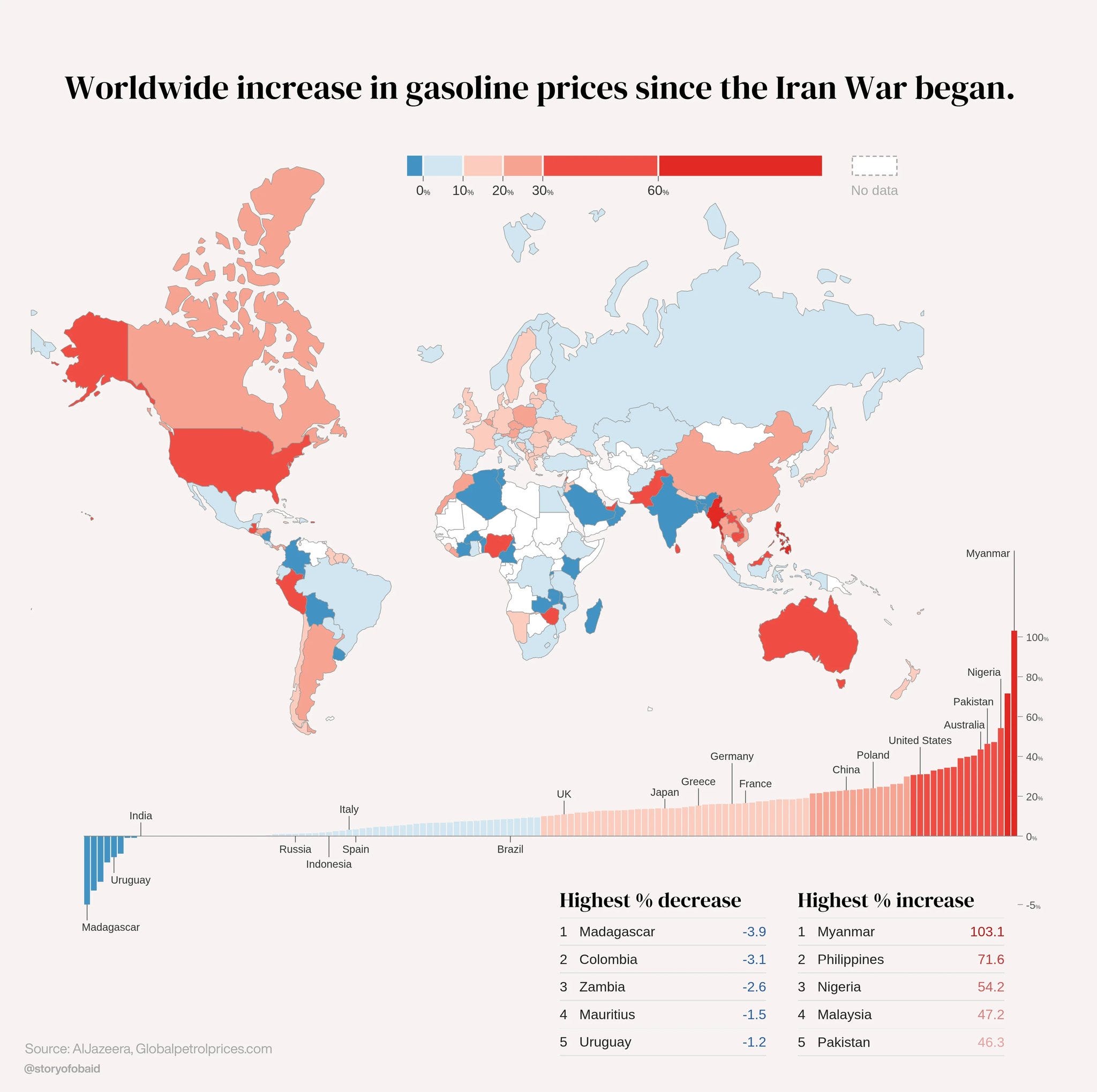
Then there is Pakistan’s energy shortages and dependence on hydrocarbon imports through the Persian Gulf. It has seen one of the highest increases in gas prices since the start of the war:
But Pakistan has also rebranded itself as Bitcoin mining hub, a source of rare earths and has praised Trump for brokering a truce with India. In short, Pakistan knows how to do diplomacy with the Trump administration.
Iran’s standby partner: the Houthis
The Houthis are part of Iran’s axis of resistance and the only meaningful ally Iran has in the war. I see them as a somewhat independent actor that functions as additional leverage for disruption by Iran.
The Houthis have held off on entering the war on Iran’s side and closing the Bab-el Mandeb strait in the Red Sea, a chokepoint that could potentialy kneecap Saudi Arabia’s oil exports. That may be because entering the war would put a target on their own backs, just after a long campaign that has depleted their own arsenals and leadership. What’s interesting: Saudi Arabia partially bankrolls the Houthis in exchange for keeping still in the Bab-el-Mandeb strait.
I see the Houthi threat as most cost-effective as long as it stays a threat, rather than being activated. The Houthis may still enter the war on Iran’s side, but they have their own network and constituency to coerce. My best guess is that the alignment and coordination between Iran and the Houthis is weaker than that between the US and Israel.
Interaction effects
At the time of writing this deep dive, the main question is: will the war end with a negotiated settlement now or will we enter another escalation after the ceasefire?
I believe the US and Iran do, in principle, both desire a quick end to the war. Trump has had an end to the war on his mind since at least the end of March. Iran’s Deputy Foreign Minister said the regime is looking for an end to the war, not another temporary ceasefire. Even as the US has continued to build up forces in the region, I read this as ‘options on the table’ rather than ‘deceptive diplomacy.’ As far as “doing a number on Kharg” is concerned, Trump has so far resisted deploying troops for extensive offensive operations.
The problem: the US and Iran talk past each other when it comes to ‘ending’ the war. I believe Trump sees a possible memorandum of understanding as the end to the war, but Iran sees it as the start of serious negotiations. Similar to how the Greenland crisis was resolved (or at least shelved), Trump is satisfied, even eager for a win on optics. He does not have the temprament or knowledge to engage with policy details and neither is he interested in delegating it to someone else.
Unfortunately for Trump, even a militarily weakened and outgunned Iran has agency. And it values substance just as much as style, which is why Iran insists on policy details and is rather inclined to compromise on style, as long as the regime does not feel disrespected. Robert Malley, on the US negotiating team for the 2015 nuclear deal points out the problem:
“A lot of the things that Iran is being asked to do are concrete, tangible, irreversible. And the commitments that, in theory, they would get from the U.S.—which is sanctions relief or the unfreezing of assets—those are spaced in time and highly reversible. We’ve seen it before.”
The problem for Iran is that sanctions removal has to be approved by Congress. And hawkish as Trump may be on Iran, Congress will be no less hawkish if it comes to removing sanctions on a hostile regime.
Another problem are diverging objectives between Israel and the US: Israel would prefer the US to at least stay on standby for another round and ideally continue the war outright. Israel’s role on the US’ side is similar to the role IRGC hardliners play for Iran. The objective of both is to continue the war because they think the enemy has not gotten what they deserve. They both have an incentive to subvert and sabotage diplomacy and an eventual implementation of an agreement. The only unknown: Trump can and does override Israel’s preferences, while the same may not be the case for Iranian ‘doves’ with their hardliners. To seal any agreement, temporary or permanent, the US will need to take into account that the Iranian negotiators have their own hardline constituency that needs to be taken care of.
The final problem: the US’ communication and negotiation style violates Iran’s red lines. Don’t take my word for it, here’s the Iranian Deputy Foreign Minister explaining it:
“We are still not there yet to move on to an actual meeting because there are issues that the Americans have not yet abandoned their maximalist position. The other sides also should understand and address our main concerns, which are illegal unilateral sanctions that Americans have imposed on Iranians and this economic terrorism which has targeted Iranian people to suffocate them and make them to revolt against the political structure inside Iran.”
While both sides excel at trash talking and posturing, it is Trump himself that gets in his own way. It would be too much to ask of him to be magnanimous with a, according to his own words, militarily defeated enemy. But at the very least, he should not be taking multiple phone calls a day to update random journalists on the latest US wishlist in the negotiations. His advisers agree.
The good news: the high-level framework that seems to be the basis of a deal is a workable solution. It reportedly includes:
A 15-year enrichment moratorium.
Downblending enriched uranium, but leikely keeping it in Iran.
IAEA insepctions.
An open SoH.
Some form of security guarantee.
Phased sanctions relief.
Here’s why I believe some form of this high-level framework will be agreed upon.
Scenarios
Scenario 1: high-level deal signed
Despite the posturing on social media and beyond, this is my base case:
Both sides are compelled by their incentives and constraints to sign a very fragile ‘peace agreement’ that is in practice a prolonged stand-off while attempting to de-escalate.
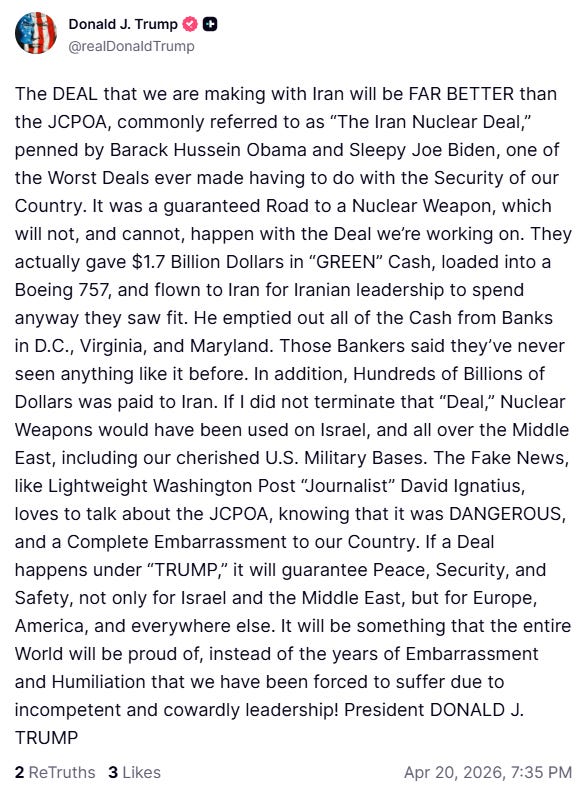
The US, and Trump in particular, seems in no mood to continue this war, which is already in ‘extra time.’ Even though hawks like Lindsey Graham would like a more stringent deal, or even better a continuation of the war, Trump knows he is on borrowed time. That’s why he is pre-selling the deal as a “FAR BETTER” deal than that of “Barack Hussein Obama:”
The stock market has rallied to record highs, so I do think Trump has room to maneuver. But a restart of the war accomplishes nothing, unless the US is willing to commit to a multi-month effort to oust the regime, which, as we have heard, has already changed anyway. Trump has not signaled any desire for that. So even though the uranium is a red line, I expect Trump to deploy his A-game ‘narrative management’ if Iran insists on keeping custody of the diluted enriched “nuclear dust.”
On the other hand, Iran desperately needs economic relief and a permanent end to the fighting. In my opinion, the time to make a stand was two weeks ago when Trump was considering war crimes, oil was above $115, and the S&P500 500 points lower. Iran passed on this opportunity, painful and expensive as it may have been in terms of damages. Then Iran wasted two weeks when Trump owned the news cycle and did little to counter his narrative or change the facts on the ground. What would being excessively obstinate accomplish at this point?
Even as Iran continues to complain about the naval blockade, Trump’s disrespect, and whatever else puts them off, I believe Iran is very interested in signing a deal with JD Vance in particular:

That is because JD Vance is:
A well-known and outspoken critic of the war.
Somebody that could be president in two and a half years and a good person to be able to hold accountable.
An excellent off-ramp in itself since he is neither Jewish like Kushner, nor aligned with Israel like Witkoff. He has a reputation to guard and a legacy still to build.
Invalidation triggers
I believe the reasons why a deal could fall through are rather simple:
JD Vance, for whatever reason, does not travel to Pakistan for negotiations. That in itself is the signal the US isn’t serious about the agreement. Iran will not sign a deal with Kushner and Witkoff only. My read is that in Iran’s perception, they were the decoy for the start of the war.
Donald Trump can’t help himself and says or does something escalatory to set Iran off and negotiations never happen. I am completely serious when I say that Trump being offline for 48 hours would probably seal the deal. According to a person familiar with the talks: “The Iranians didn’t appreciate POTUS negotiating through social media and making it appear as if they had signed off on issues they hadn’t yet agreed to.”
Both sides do not show the necessary bit of flexibility to close the gap. The deal will be a sloppy introduction to a fresh nuclear deal that will take months to negotiate and resemble the deal Trump has scrapped to a large degree. If Iran prioritizes dignity and enrichment and/or if the US insists on its maximalist demands that violate Iran’s red lines, it will fall through.
How a possible deal could look like
I believe it will be similar to the October 2025 Gaza ceasefire: some high-level points, an official ‘end’ to the war, Trump’s name on it, and a lot of lofty hopes and dreams for the future. In terms of ‘commitments’, my best guesses are the following:
Iran and the United States both commit to an end to the war and a non-aggression pact, effective immediately.
Iran will be granted the right to enrichment but accepts a 15-year moratorium.
Iran will agree to dilute its enriched uranium and commit to enrich only in overground reactors for research and medical purposes. There may be some element of sending a part of it to Pakistan.
Iran will commit to IAEA oversight and decommission all its underground facilities.
The SoH will be ‘jointly controlled’ by Iran and Oman, with further negotiations on an exact mechanism to determine details to follow. There may also be an element of a GCC consortium in governing the Strait or the proceeds of a possible tax.
Iran will receive phased sanctions relief, with a first tranche tied to unsanctioned Iranian oil being effective immediately.
Iran and the United states will work on a reconstruction fund to compensate Iran for the damages of the war. It will be partly funded by unfrozen Iranian assets.
Iran commits to ceasing to fund terrorist and extremist groups around the world.
Iran and the US commit to negotiating details regarding all nuclear questions in the next 60 days.
Iran and the US commit to negotiating limits to the Iranian ballistic missile program in the 60 days after that.
Scenario 2: escalation
I see a 60% chance for an agreement if the meeting happens and if JD Vance participates as planned. But if it falls through, I expect a fierce round of fighting. Trump will be furious that Iran did not take the deal when he, in his view, showed maximum flexibility and goodwill. Iranian hardliners will consider themselves vindicated as the US came to talk first only to shoot later (or did not talk at all). I think the gloves will come off in that case and the US may in fact align with Israel in that case.
Scenario 3: another short-term ceasefire
I could see a 10% chance for another short-term strategic ceasefire. Trump is “over it” and doesn’t want to fight anymore but will if he has to. That’s why I think he’d be livid if a deal falls through and why I think kicking the can down the road is not an option. This doesn’t include a tactical extension of 48 hours to give the negotiators more time. But I think another two weeks or even more is not on the table for Trump. In this scenario, we’d get an even more unstable version of the previous two weeks and I’d put the chance of a restart of the war before the end of the ceasefire at over 70%.
My trades
It took me a while to arrive at a good expression of my thesis on Polymarket. The two main problems:
We don’t know if an agreement is framed as a peace agreement.
We don’t know how the leaked content measures up against the rules.
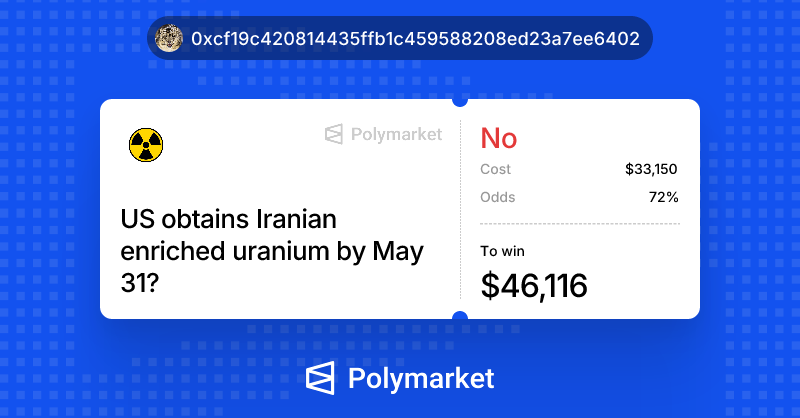
By far my highest conviction bet is that the US will not physically obtain any Iranian uranium. The US may have removed uranium from foreign countries under peacetime conditions but never under fire. This is one of Iran’s few non-negotiable red lines and I do not see them yielding on this in any shape or form. The fair value of this is maybe 5c:
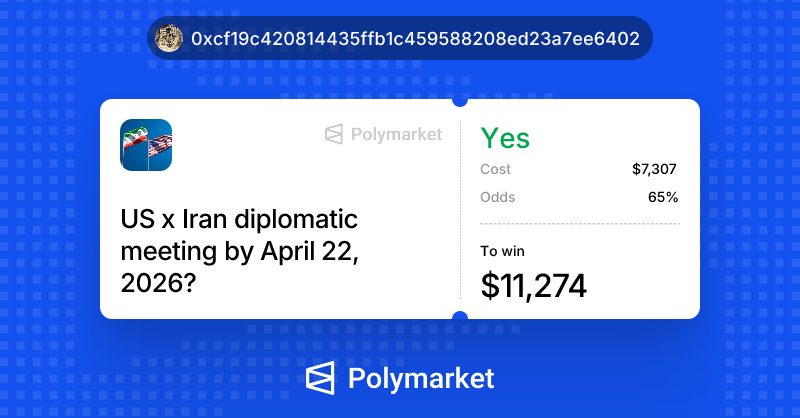
Regarding the meeting itself, I continue to hold my shares come what may. As long as JD Vance appears, they will meet, social media bluster or not:
In terms of uranium-related bets that may be covered by a deal, my fair value estimates in case of a deal are:
Iran to agree to a moratorium on enrichment: 80%. The only problem with this bet is that the specific framing of the moratorium could resolve it to No, but this has basically been leaked.
The US to agree to Iran’s right to enrichment in principle: 80%. Again, both of these points were discussed at the previous meeting and the gap is tactical, not strategic.
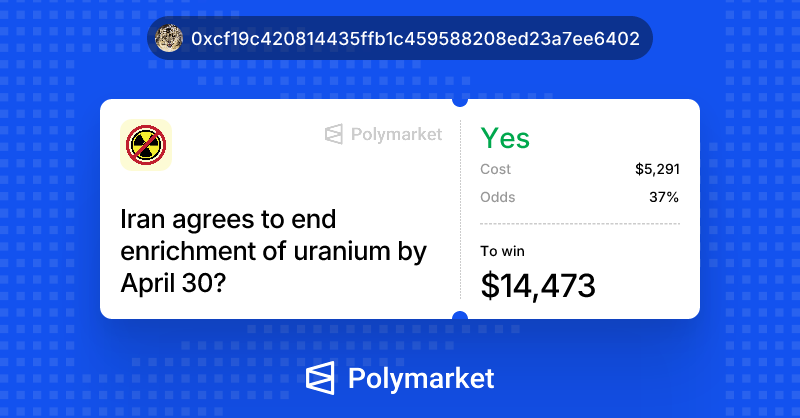
Iran to agree to send some of its uranium abroad: 40%. This is one of Iran’s red lines and they have been adamant about it. But it also happens to be one of the US’ core demands and a critical component to making the deal ‘better’ than the Obama deal. I could see middle ground by Iran agreeing to dilute some and send some to Pakistan, maybe also for dilution. I misplayed this market and initially held No, but executed poorly, then bought Yes but oversized.
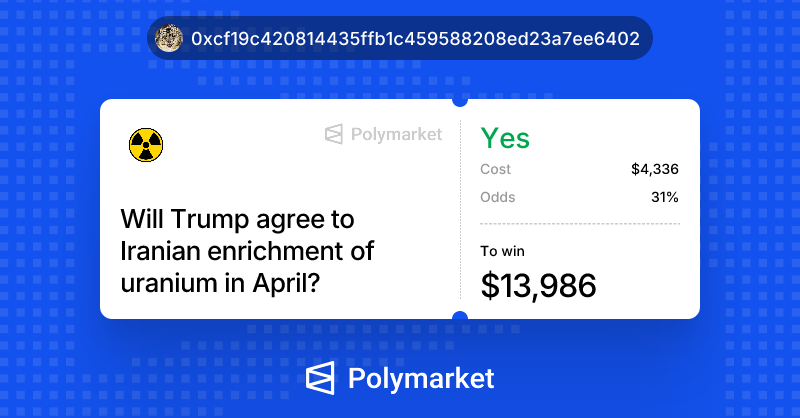
The actual peace agreement market is the most interesting one. I really liked the Wednesday deadline and started buying on Saturday, but alas, smart money can only do so much when dumb leaders are involved. My idea was for talks to start on Monday as planned, be wrapped up on Tuesday, with maybe a day to spare. As things stand, even in the best of circumstances talks won’t start before Wednesday and are unlikely to yield a quick agreement. While I’d give it a 75% that the deal is framed as ‘peace deal,’ it would probably come on Thursday or maybe even Friday.
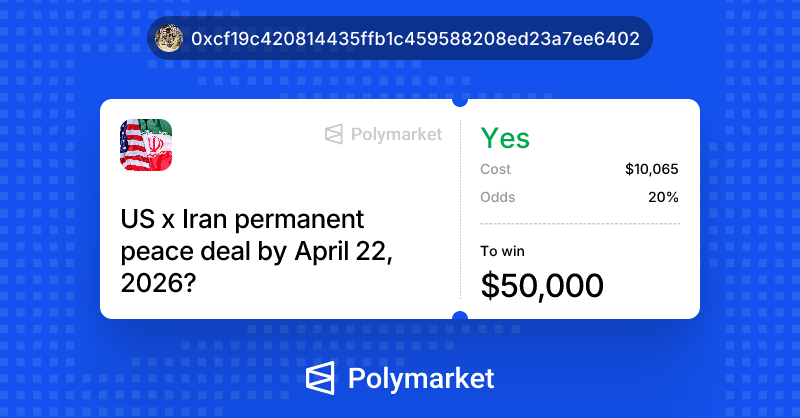
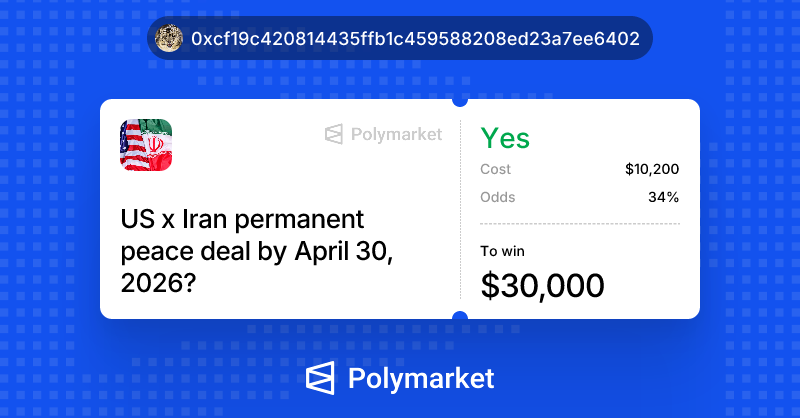
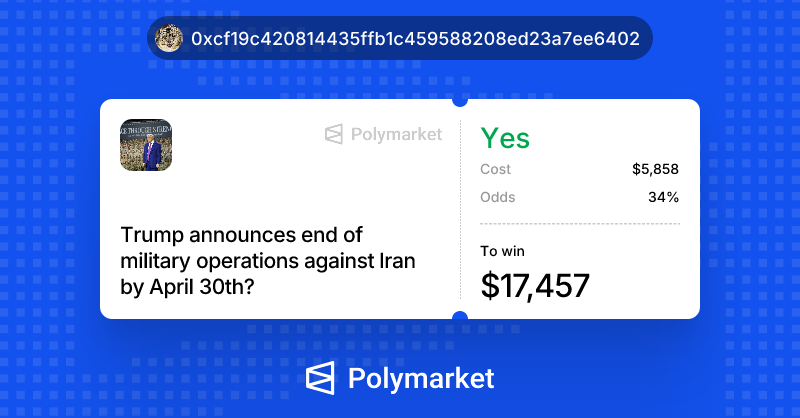
But even if it isn’t a peace deal but a (imo unlikely) ‘long ceasefire’, I see a decent chance that Trump will announce the military operation as being over:
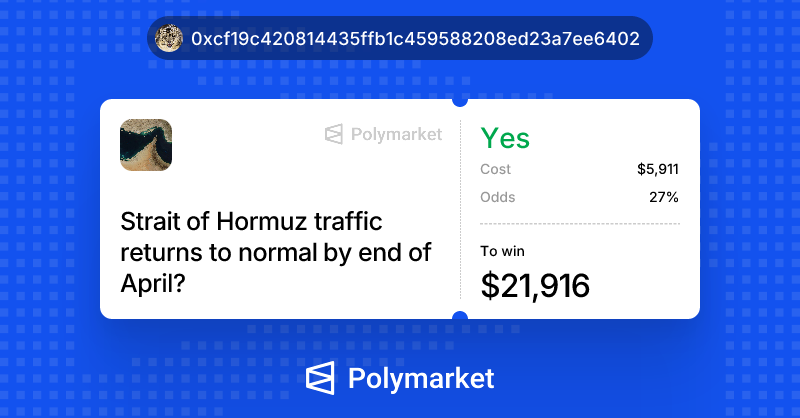
Some final thoughts on the Strait of Hormuz market. Every smart trader and their mom seems to be on Yes. I realize and agree that it’s a good proxy for a deal. Some points of caution:
The market will pump upon an agreement, but that is just the first euphoria pump. The two main lanes may not be used or it could be a phased opening.
I’d expect the IRGC to adhere to an initial deal, at least for a day or two. But that is not a given. If it does happen, the odds would likely go to 90 quickly if the average clears the threshold.
I see a lot of selling pressure from Yes with big bags. That could depress the price on the way up.
I also hold a bunch of JD Vance as Republican nominee and 2028 election winner shares. I think a successful deal will boost his standing and it’s in his own best interest to make it succeed.
Hedges
Before the first ceasefire I had the wrong read but the right hedges:
This time I like the following markets and am bidding there:
Trump to visit China has been a cursed market for me, but it trades as a peace proxy. If the war were to restart, this would likely dump. If it were to restart in the vicious way I expect, the meeting could easily get delayed again. In any case, China has not yet confirmed. In case of a deal, you would have to take the L.
Similar idea with the Mandeb Strait market — if the war restarts, the Houthis could well enter the conflict, and quickly. This is reasonably cheap and a clear bet on an immediate strong escalation. If an agreement is reached, this will got to zero in hours.
I don’t like the Invasion market in either direction. Yes goes against Trump’s fears to escalate with ground troops but will definitely pump to beyond 50% in case of war. In case of peace, No will deflate to maybe 15%. That’s not great expected value in my opinion.
The same goes for the Regime fall market. Only sustained pressure over months would give this market a real chance to go Yes. As a speculative hedge it’s ok though and has little downside.
The hedge I have deployed most capital to is simply short Ethereum. I don’t see a scenario where ETH does not take a serious hit if war restarts. Even in case of peace, the pump may fade fast, but crypto trading is not my strong suit.
What’s next?
If and when the next thesis will be published is still to be determined. I will probably be a bit more active over the next few weeks, but I’m questioning how much time and energy I want to spend on prediction markets. I feel there is ever less juice to be squeezed with more sharp people in the markets and fees. The industry also isn’t developing in the direction I was hoping for. Time will tell.
What a nice article. Thank you for sharing your feelings, your P&L, and writing such a detailed post. My attention span gave up at just over half way, but I really enjoyed all the wisdom and insights. Thank you. I, too, am completely exhausted with all the gaslighting and delusional reporting.
Great article. I always enjoy seeing your perspective on geopolitical events. Very interesting 👌🏻